
Heimo Zobernig _
02/05/2026 – 29/08/2026
Galerie Nagel Draxler
Weydingerstraße 2/4
10178 Berlin
Eröffnung / Opening:
Freitag, Mai 1, 2026, 18 – 21 Uhr
Friday, May 1, 2026, 6 – 9pm
Öffnungszeiten / Opening hours:
Dienstag - Freitag 11 – 18 Uhr, Samstag 12 – 18 Uhr
Tuesday - Friday 11am – 6pm, Saturday 12 – 6pm
Besondere Öffnungszeiten während des Berlin Gallery Weekends /
Special Opening hours during Berlin Gallery Weekend:
Samstag, 2. Mai 2026, 11 – 18 Uhr, Saturday, May 2, 2026, 11am – 6pm
Sonntag, 3. Mai 2026, 11 – 18 Uhr, Sunday, May 3, 2026, 11am – 6pm
Press Release
*Please scroll down for the German version.*
One has to flee modernity for fear that it won’t save itself.
Frank Perrin, Symposium Villa Arson, Nice, 1991[1]
Heimo Zobernig started his artistic practice at the end of the 1970s, at a time when skepticism about what art can do (or be) was already rather old. Since Hegel it has been clear that art is made, but no longer true; since Adorno that nothing else about it can be taken for granted. At no time since Modernity has art been apace with its own theory.
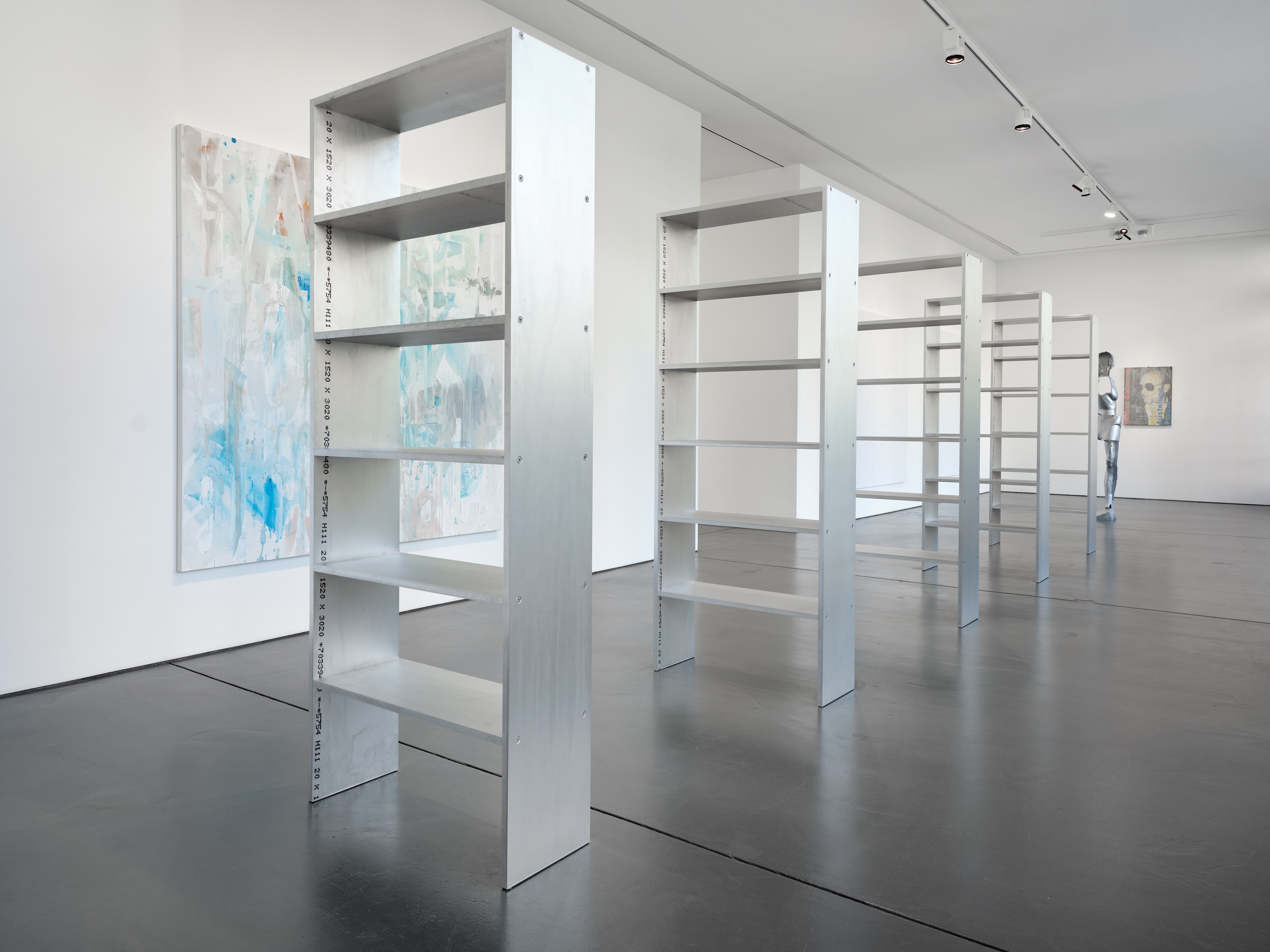
An interest in the material and proportions of standardized objects from everyday life runs through Zobernig’s entire sculptural oeuvre. Cardboard boxes, toilet paper rolls, mannequins—things that seem to slip into our perception almost incidentally—take center stage in Zobernig’s work. From the very beginning, he has repeatedly featured the IKEA Billy bookshelf, the world’s most widely distributed mass-produced bookshelf. Zobernig creates replicas of Billy bookshelves or their parts made of particleboard or plywood, reassembles deconstructed Billy bookshelves into new sculptures, or uses store-bought ones in which he places amorphous fabric dolls in video green, red, or blue.
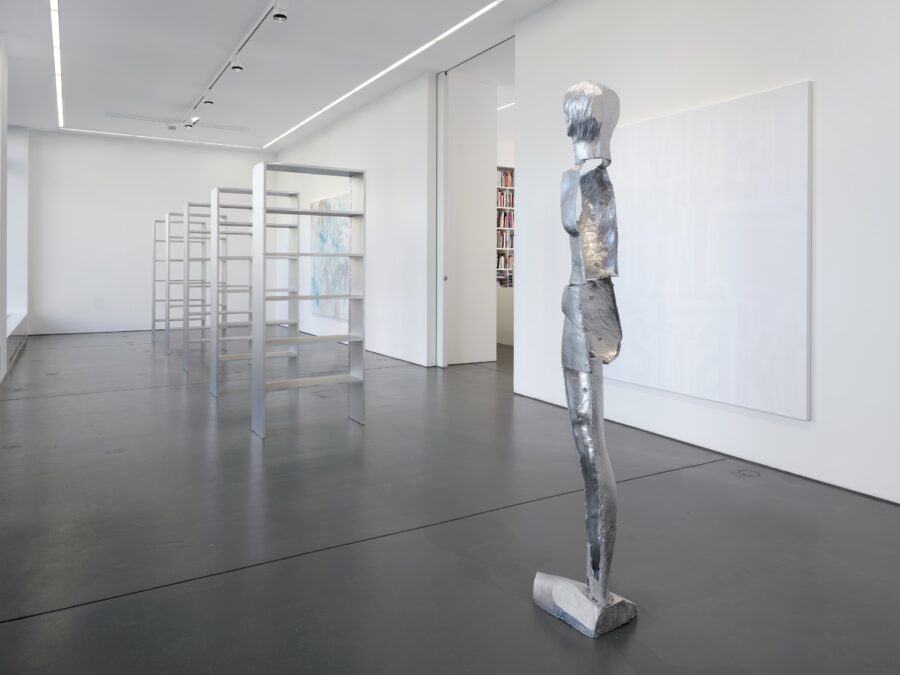
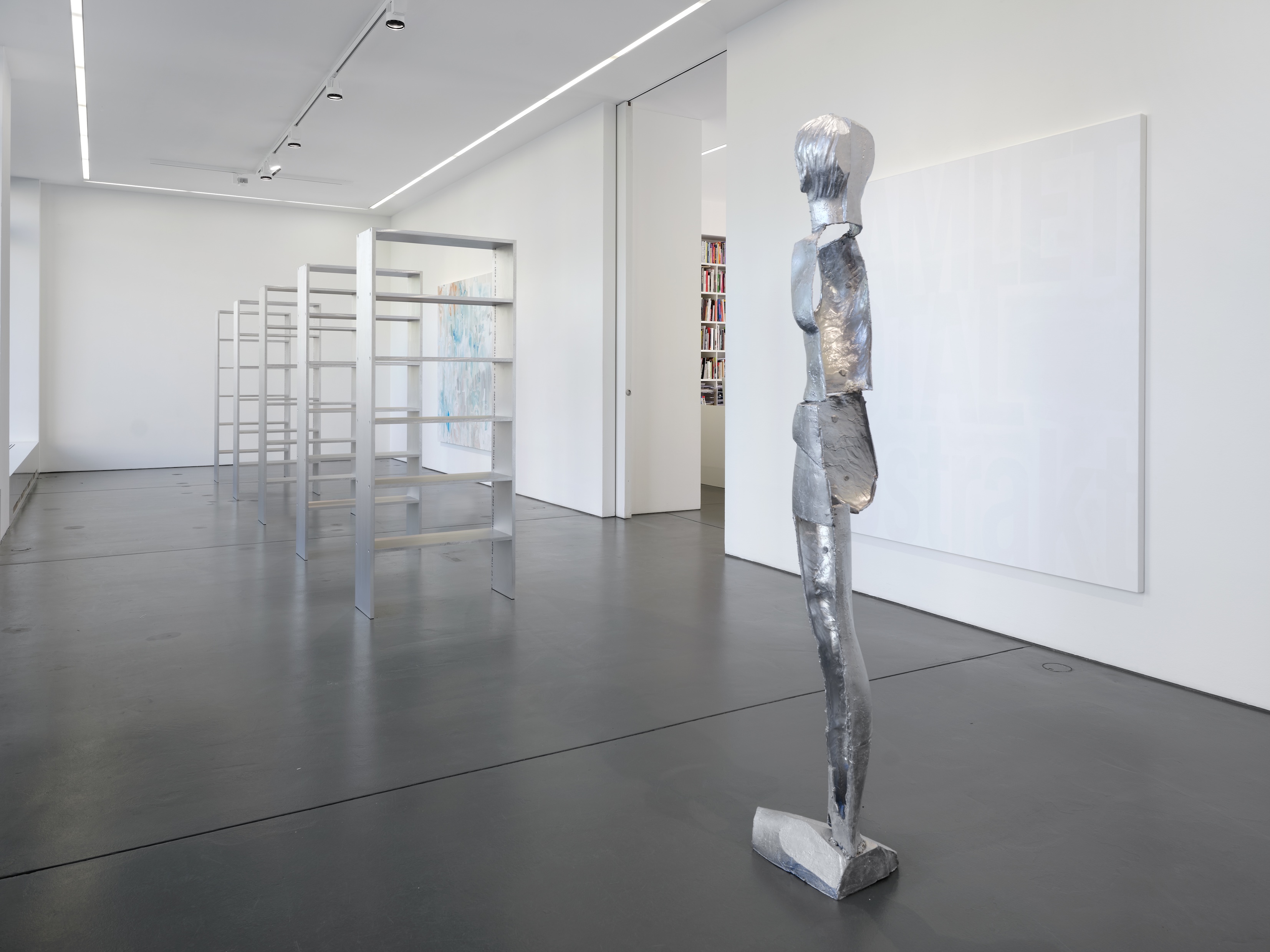
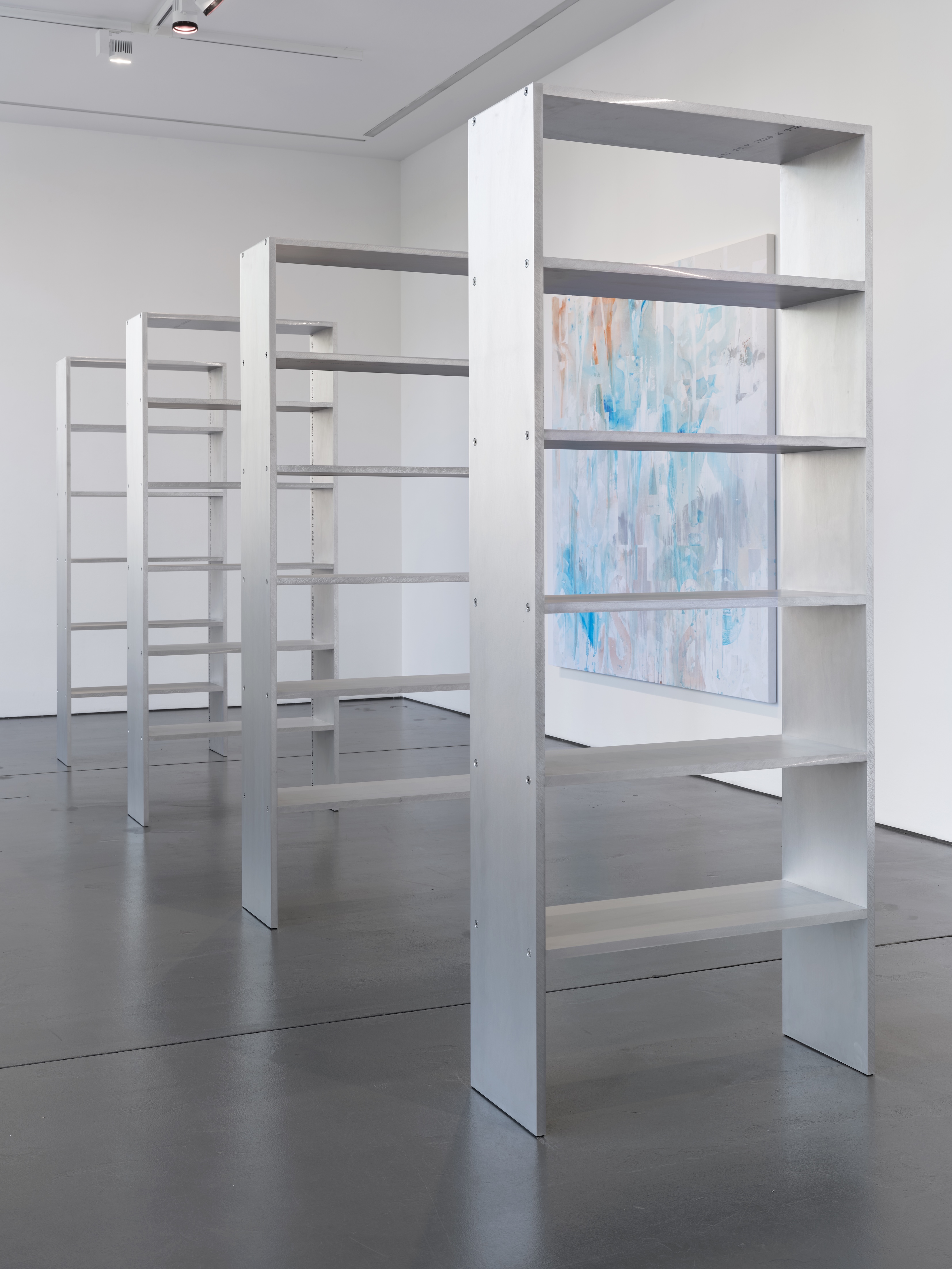
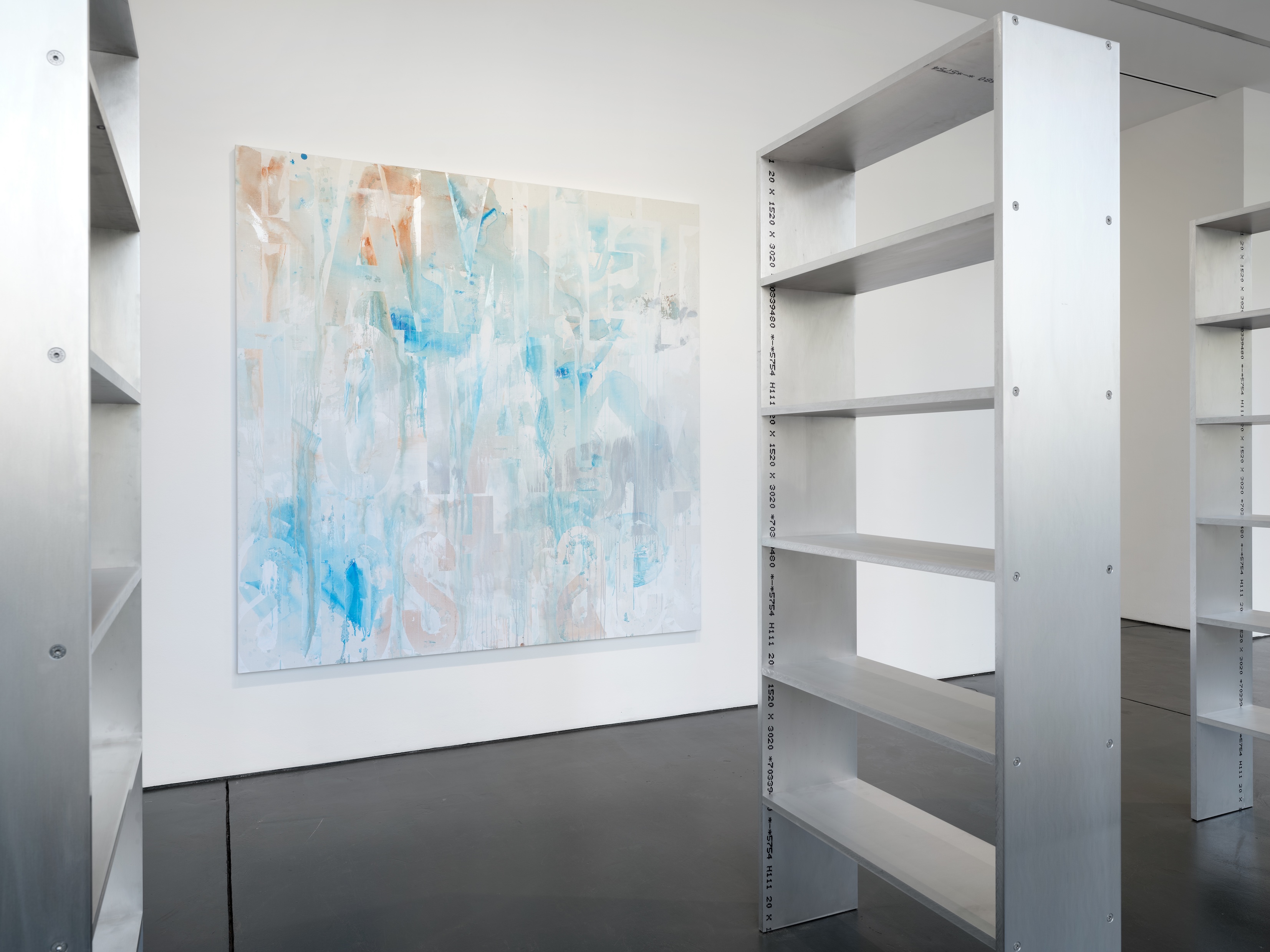
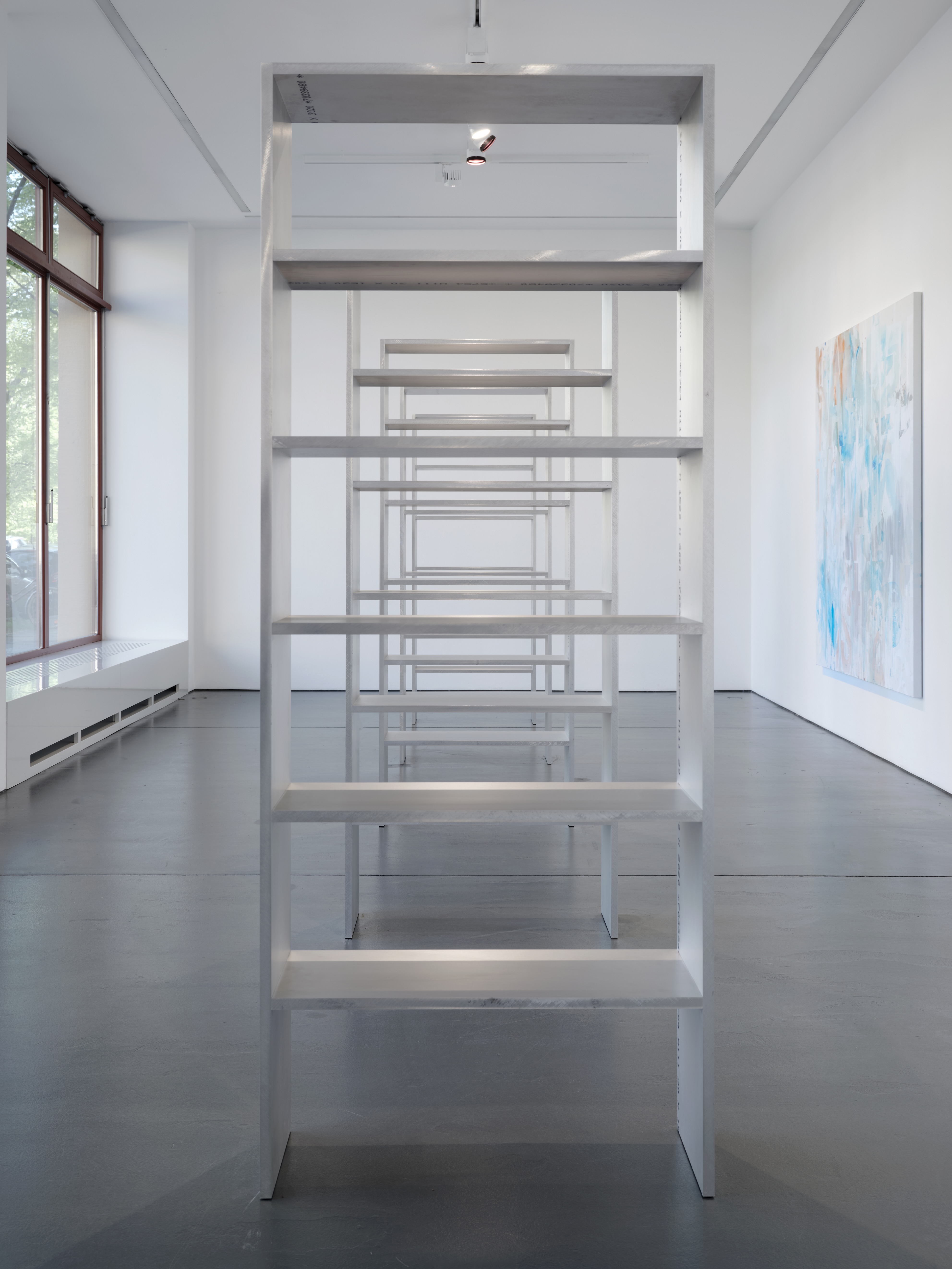
The latest series that we are now showing in Berlin—which could be described as a kind of “super-series”— consists of solid aluminum shelves that evoke a number of references: contemporary design, industrial aesthetics, but above all the sublime serenity of “Volumes” known from Minimal Art. Naturally, Zobernig leaves the material labels printed on the aluminum sheets by the supplier in place. The shelves are empty but have inscriptions. These inscriptions remain abstract to the art audience.
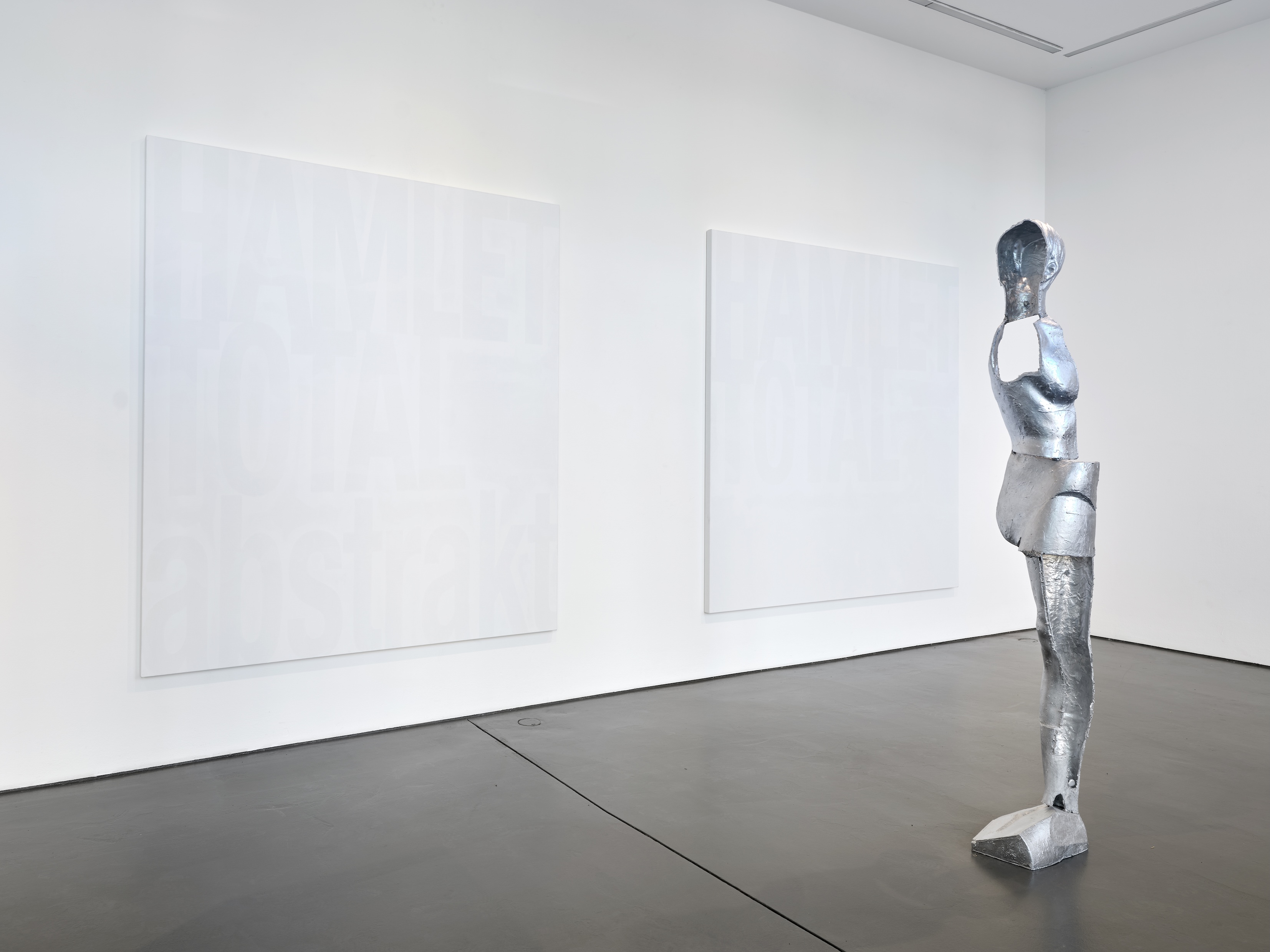
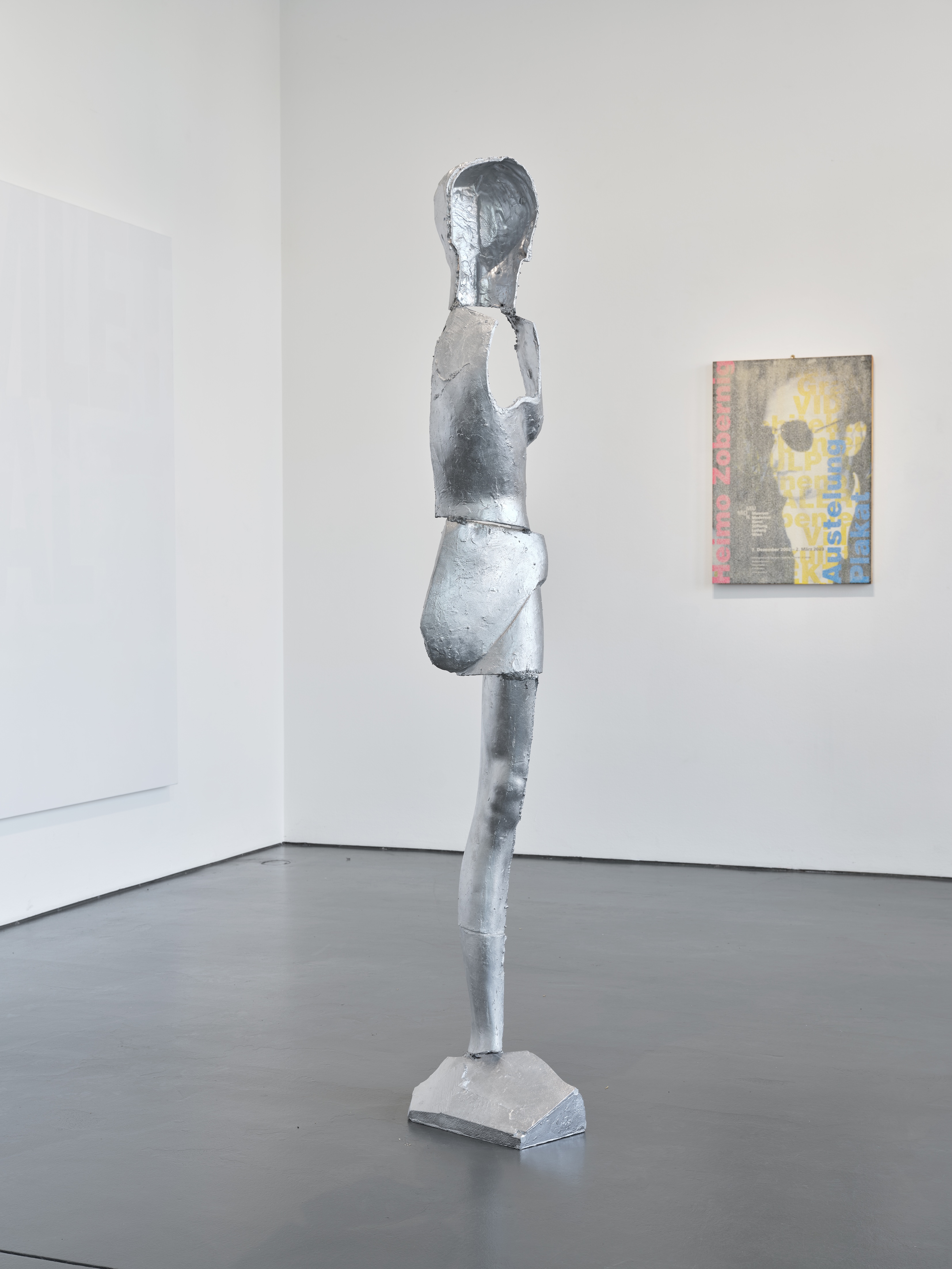
In addition, there is a fragmented human figure, also made of cast aluminum.
I was Hamlet. I stood on the coast and spoke with the surf BLABLA.
At my back, the ruins of Europe.
Heiner Müller, Hamletmachine, 1977
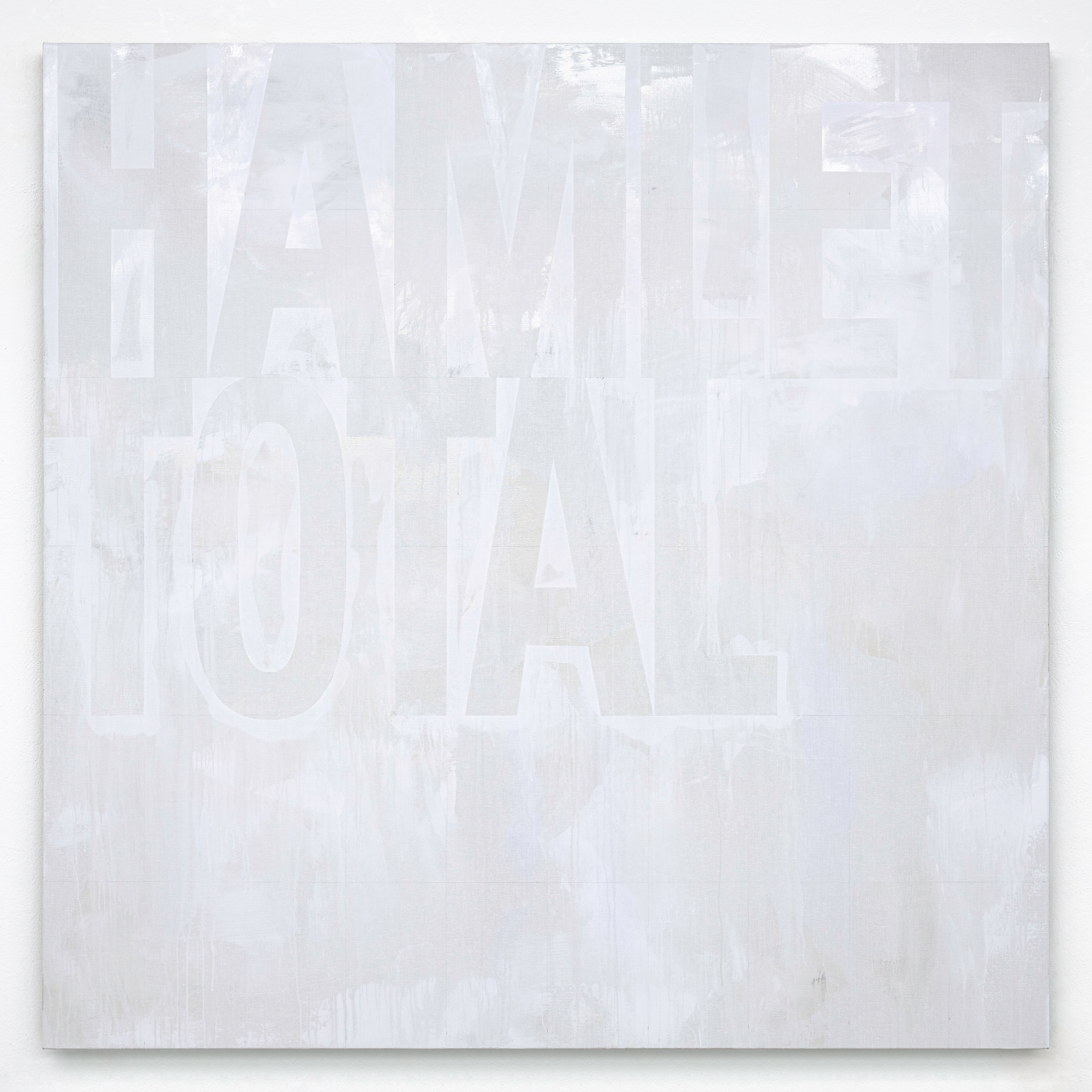
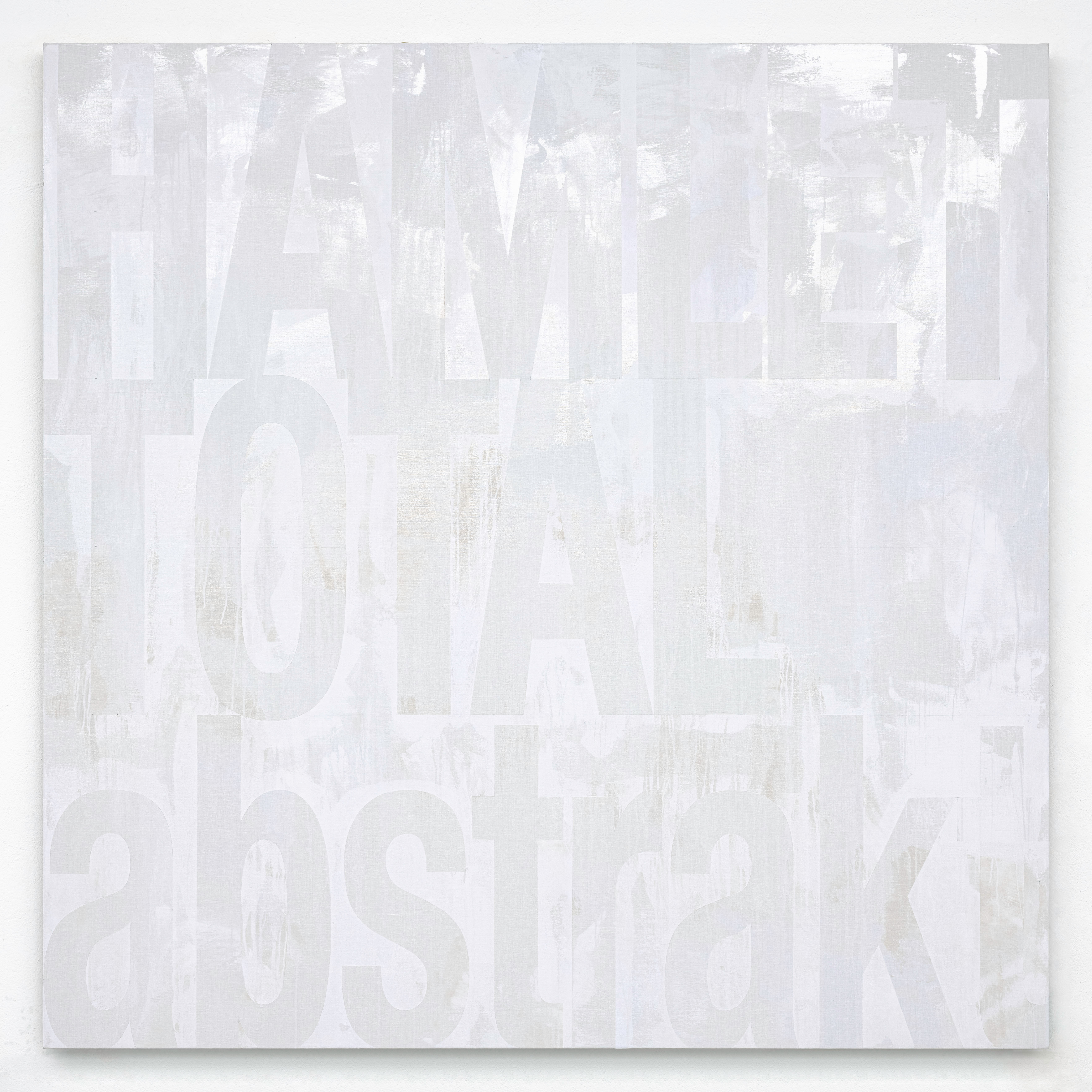
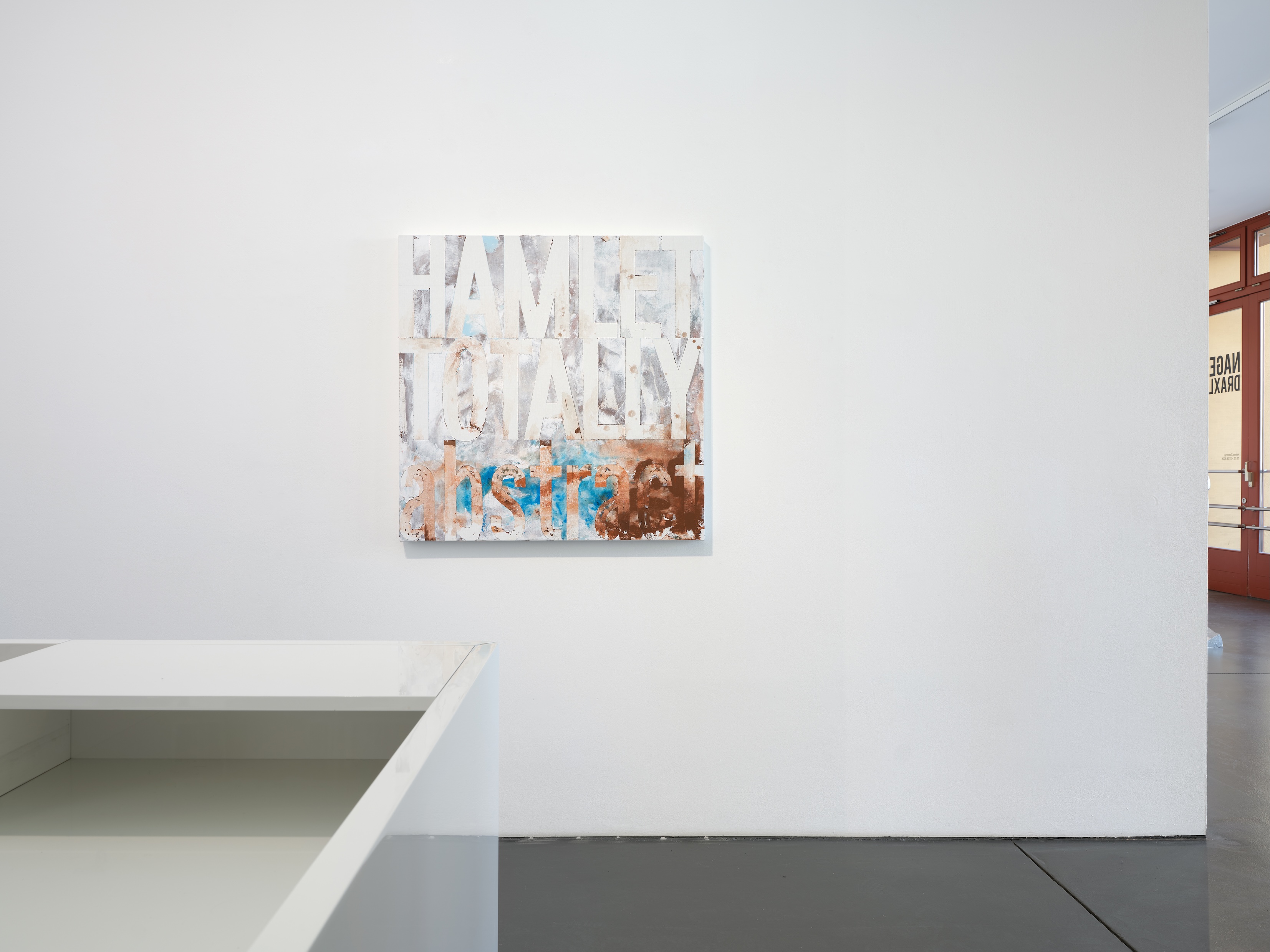
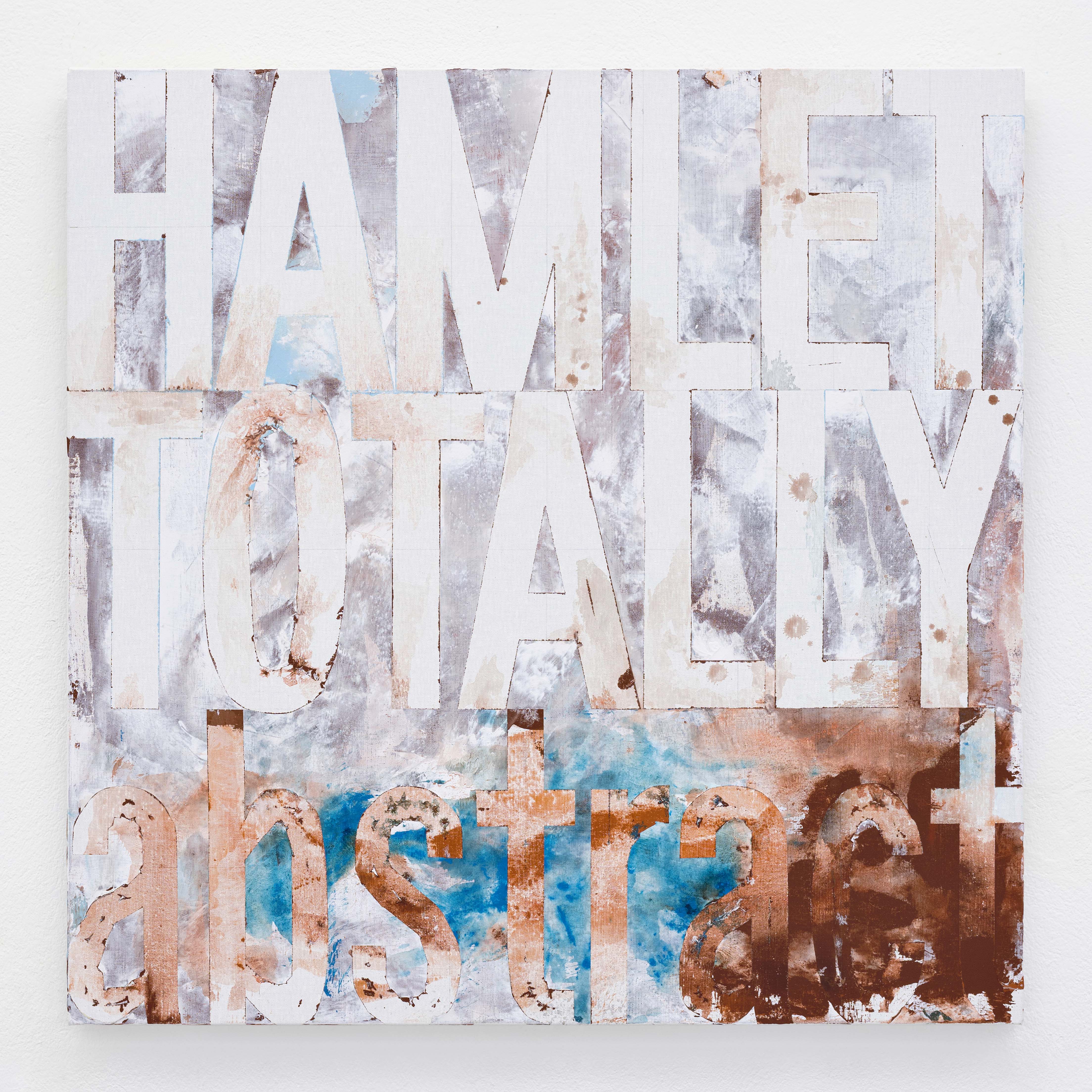
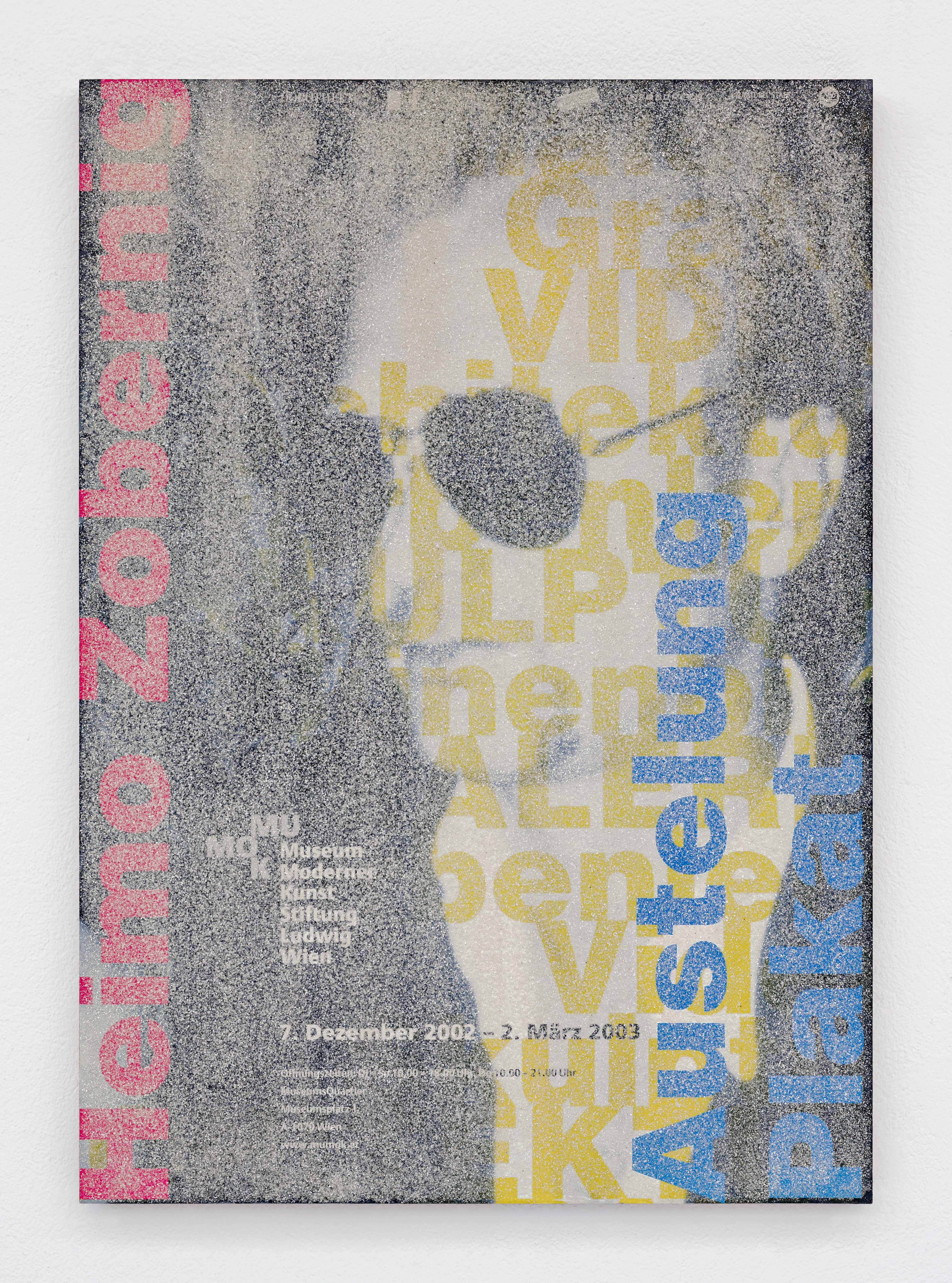
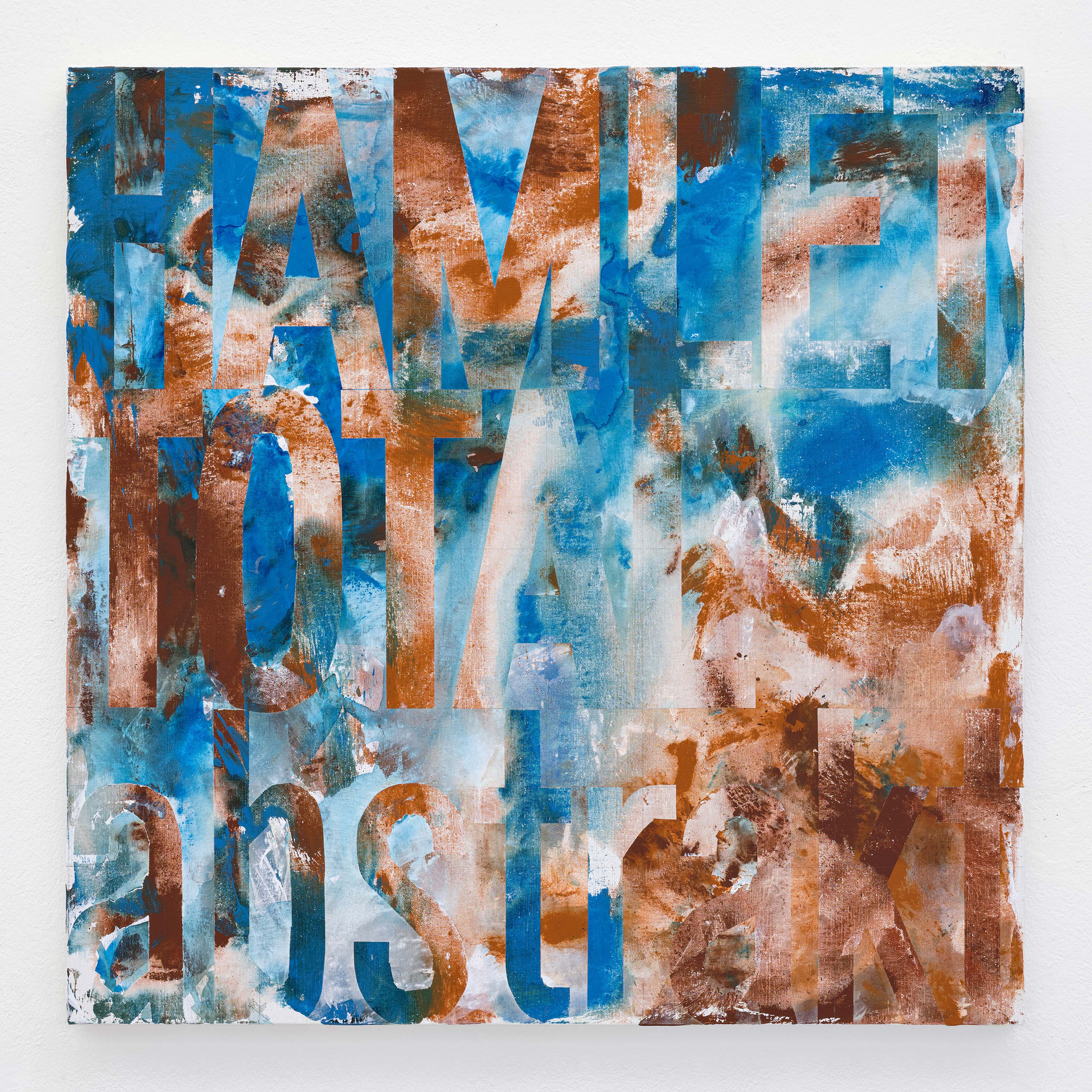
When asked by New York curator Matthew Higgs which book is the most important to him, Zobernig chose the Reclam edition of Shakespeare’s Hamlet. From Hamlet, one can learn that the dead are not dead; they return as ghosts. The new Hamlet paintings, which Zobernig presents here alongside the IKEA Billy bookshelf sculptures, feature the words “Hamlet total abstrakt” or “Hamlet totally abstract.” In Zobernig’s work, these canvases fall into the category of typographic compositions that generally do not evoke specific content, but rather present tautologies or individual terms—such as “painting,” “video,” “REAL EGAL,” or “LOVE”—as if they were presented on a stage.
Zobernig, who studied stage design and who, in 1982, created a set for Heiner Müller’s play Quartett before devoting himself exclusively to his work as an artist, brings Hamlet's ghost onto the stage of his art and, at this time and in this place, also the ghost of Heiner Müller.
1977 was marked by the following events:
HEINER MÜLLER published HAMLETMASCHINE, written in 1977 it was first officially performed in the GDR in 1989. // HEIMO ZOBERNIG moved to Vienna. // Vienna's first IKEA opened...
Heimo Zobernig (*1958 Mauthen, Austria) is one of the most renowned artists working in Europe today. He has exhibited extensively all over the world and created a considerable body of work that includes painting, sculpture, video, installation, architectural interventions and performance. These carry his exploration of modernism, monochrome and grids, as well as constructivism, minimalism, color theory, and geometric abstraction. He engages with modernist iconography to question the ideological position and conditions which underpin them, subverting and reinterpreting them with a lightness of touch and an economy of material, means and methodology that is at turns playful, dry, witty, unsettling and disarming. Since 2000 he has been Professor of Sculpture at the Academy of Fine Arts Vienna. Solo exhibitions include mumok Museum moderner Kunst Stiftung Ludwig, Vienna, Sharjah Art Museum, Sharjah, Museum Ludwig Cologne, Malmö Konsthall, Malmö, Austrian Pavillon, 56. Biennale di Venezia, Venice, MUDAM Luxembourg, Museo Reina Sofia, Madrid, CAPC, Musée d’Art Contemporain, Bordeaux, among others. In 2016, he was awarded the prestigious Roswitha Haftmann Prize. Zobernig lives and works in Vienna.
[1] In the accompanying exhibition, Heimo Zobernig displayed a black cardboard cube in a kind of staged setting. When Dirk Snauwaert invited him to a solo exhibition at the Kunstverein München in 1992, Zobernig “reenacted” the Nice Symposium there.
__________
Man muss vor der Moderne fliehen, aus Angst, dass sie sich selbst nicht rettet.
Frank Perrin, Symposium Villa Arson, Nizza, 1991[1]
Als Heimo Zobernig Ende der 70er Jahre seine künstlerische Laufbahn beginnt, ist die Skepsis an dem, was Kunst (sein) kann, schon sehr alt. Seit Hegel ist klar, Kunst ist gemacht, aber nicht mehr wahr, seit Adorno darf nichts mehr an ihr als selbstverständlich gelten. Zu keiner Zeit befindet sich die Kunst seit der Moderne auf der Höhe ihrer eigenen Theorie.
Durch Zobernigs gesamtes skulpturales Oeuvre zieht sich ein Interesse für das Material und die Proportionen standardisierter Objekte aus der Alltagswelt. Kartons, Klorollen, Schaufensterpuppen, Dinge, die scheinbar beiläufig in die Wahrnehmung einfließen, erscheinen bei Zobernig ins Zentrum gerückt. Von Anfang an beschäftigt er sich so auch immer wieder mit dem IKEA Billy Regal, dem wohl weltweit am meisten verbreiteten massengefertigten Bücherregal. Zobernig baut Billy Regale ganz oder teilweise aus Pressspan nach, er nimmt sie auseinander und setzt sie zu Skulpturen zusammen, oder er verwendet sie so wie sie aus dem IKEA Kaufhaus kommen und drapiert amorphe Stoffskulpturen in Video grün, rot oder blau in ihnen.
Die neueste Serie, die wir in Berlin zeigen und die man als eine Art „Superserie“ bezeichnen könnte, besteht nun aus massiven Aluminiumregalen, die eine Reihe von Assoziationen wecken: zeitgenössisches Design, Industrieästhetik, aber vor allem die erhabene Gelassenheit von „Volumes“ aus der Minimal Art. Natürlich lässt Zobernig die auf Werklieferungen von Aluminiumplatten gedruckten Materialbezeichnungen an ihrem Platz. Die Regale sind leer, aber beschriftet. Die Beschriftung bleibt für das Kunstpublikum abstrakt.
Hinzu kommt eine fragmentierte menschliche Figur ebenfalls aus Aluminiumguss.
Ich war Hamlet. Ich stand an der Küste und redete mit der Brandung BLABLA.
In meinem Rücken die Ruinen von Europa.
Heiner Müller, Hamletmaschine, 1977
Auf die Frage des New Yorker Kurators Matthew Higgs, welches das allerwichtigste Buch für ihn ist, fiel Zobernigs Wahl auf die Reclam Ausgabe von Shakespeares Hamlet. Von Hamlet kann man lernen, dass die Toten nicht tot sind, sie kehren wieder als Gespenster. Die neuen Hamlet Bilder, die Zobernig hier zusammen mit den IKEA Billy Bücherregalskulpturen zeigt, enthalten die Worte Hamlet total abstrakt, oder Hamlet totally abstract. Die Leinwände fallen in die Kategorie der Schriftbilder bei Zobernig, die in der Regel keine konkreten Inhalte aufrufen, sondern Tautologien oder einzelne Begriffe, wie painting, video, REAL EGAL oder LOVE quasi wie auf einer Bühne "auftreten" lassen. Zobernig, der Bühnenbild studiert hat, und der 1982 noch eine Bühne für das Stück Quartett von Heiner Müller entworfen hat, bevor er ausschließlich als Künstler arbeitete, holt Hamlets Gespenst auf die Bühne seiner Kunst und, in dieser Zeit, an diesem Ort auch das Gespenst Heiner Müllers.
Das Jahr 1977 wurde u.a. geprägt von folgenden Ereignissen:
HEINER MÜLLER veröffentlicht HAMLETMASCHINE, der Text entstand 1977, die erste offizielle Aufführung in der DDR erfolgte 1989. // HEIMO ZOBERNIG zieht nach Wien. // Der erste IKEA-Markt Wiens wird eröffnet...
Heimo Zobernig (*1958 in Mauthen, Österreich) zählt zu den renommiertesten Künstlern, die heute in Europa tätig sind. Er hat zahlreiche Ausstellungen weltweit realisiert und ein umfangreiches Œuvre geschaffen, das Malerei, Skulptur, Video, Installation, architektonische Interventionen und Performance umfasst. Darin wird seine Auseinandersetzung mit Modernismus, Monochromie und Rastern sowie mit Konstruktivismus, Minimalismus, Farbtheorie und geometrischer Abstraktion deutlich. Er beschäftigt sich mit modernistischer Ikonografie, um die ihr zugrunde liegenden ideologischen Positionen und Bedingungen zu hinterfragen, und sie zu unterlaufen und neu zu interpretieren – mit einer Leichtigkeit und einer Ökonomie von Material, Mitteln und Methodik, die abwechselnd verspielt, trocken, witzig, beunruhigend und entwaffnend wirkt. Von 2000 bis 2021 war er Professor für Bildhauerei an der Akademie der bildenden Künste Wien. Heimo Zobernig hatte zahlreiche Einzelausstellungen darunter im mumok Museum moderner Kunst Stiftung Ludwig, Wien, Sharjah Art Museum, Sharjah, Museum Ludwig, Köln, Malmö Konsthall, Malmö, Österreichische Pavillon, 56. Biennale di Venezia, Venedig, MUDAM, Luxemburg, Museo Reina Sofia, Madrid, sowie im CAPC, Musée d’Art Contemporain, Bordeaux. Im Jahr 2016 wurde ihm der renommierte Roswitha-Haftmann-Preis verliehen. Zobernig lebt und arbeitet in Wien.
[1] In der dazugehörigen Ausstellung zeigt Heimo Zobernig einen schwarzen Karton-Würfel in einer Art Bühnensituation. Als Dirk Snauwaert ihn 1999 zu einer Einzelausstellung im Kunstverein München einlädt, lässt Zobernig das Symposium von Nizza dort "wiederaufführen".