
Nadya Tolokonnikova MEMORY LOSS
05/09/2026 – 24/10/2026
Elisenstraße 4-6
50667 Köln
Freitag, 04. Sept. 2026, 18 – 21 Uhr
Friday Sept. 04, 2026, 6 – 9 pm
Mittwoch - Freitag 11 – 18 Uhr, Samstag 11 – 16 Uhr
Wednesday - Friday 11am – 6pm, Saturday 11am – 4pm
Verlängerte Öffnungszeiten während der DC Open:
Sonntag, 6. September 2026, 13:00 – 17:00 Uhr
Extended opening hours during DC Open:
Saturday, September 5, 2026, 1 – 7 pm
Sunday, September 6, 2026, 1 – 5 pm
Press Release
Nadya Tolokonnikova is many things. Dissident and pop star, conceptual artist and punk. But above all, she is one thing: an iconoclast who creates icons of her own. A contradiction.
That contradiction sits at the center of her exhibition here in Cologne. What does it actually mean? Let’s start with one side of it: iconoclasm. In Tolokonnikova’s art, the term is to be taken literally. It targets icons—those of the Orthodox Church, and those of Russian state ideology: the cult of Putin.
Back in 2012, Tolokonnikova and Pussy Riot staged one of their “Punk Prayer” performances inside Moscow’s Cathedral of Christ the Saviour, the greatest shrine of Russian Orthodoxy, itself deeply subservient to the Kremlin. A desecration of symbols of authority, one might say, that led to Tolokonnikova’s exile and her nearly two-year imprisonment in a penal labor camp in Mordovia. In 2023, already living in exile, came PUTIN’S ASHES, a video performance in which she and a group of masked women burned a propaganda portrait of the dictator, eventually offering the ashes for sale as heretical relics. She was punished for that, too. By then, the Russian state, waging its war of aggression against Ukraine, had placed Tolokonnikova on its international wanted list.
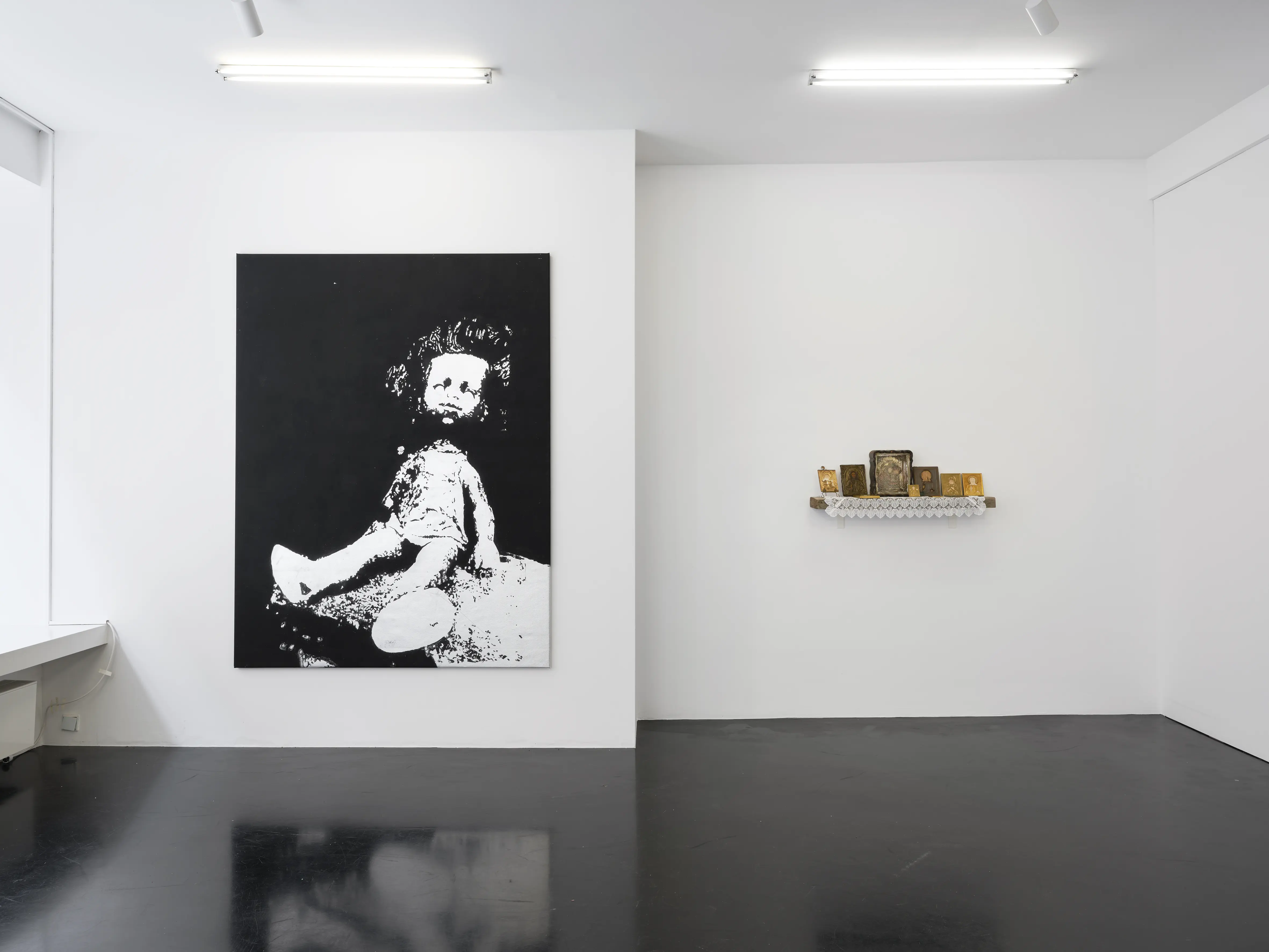
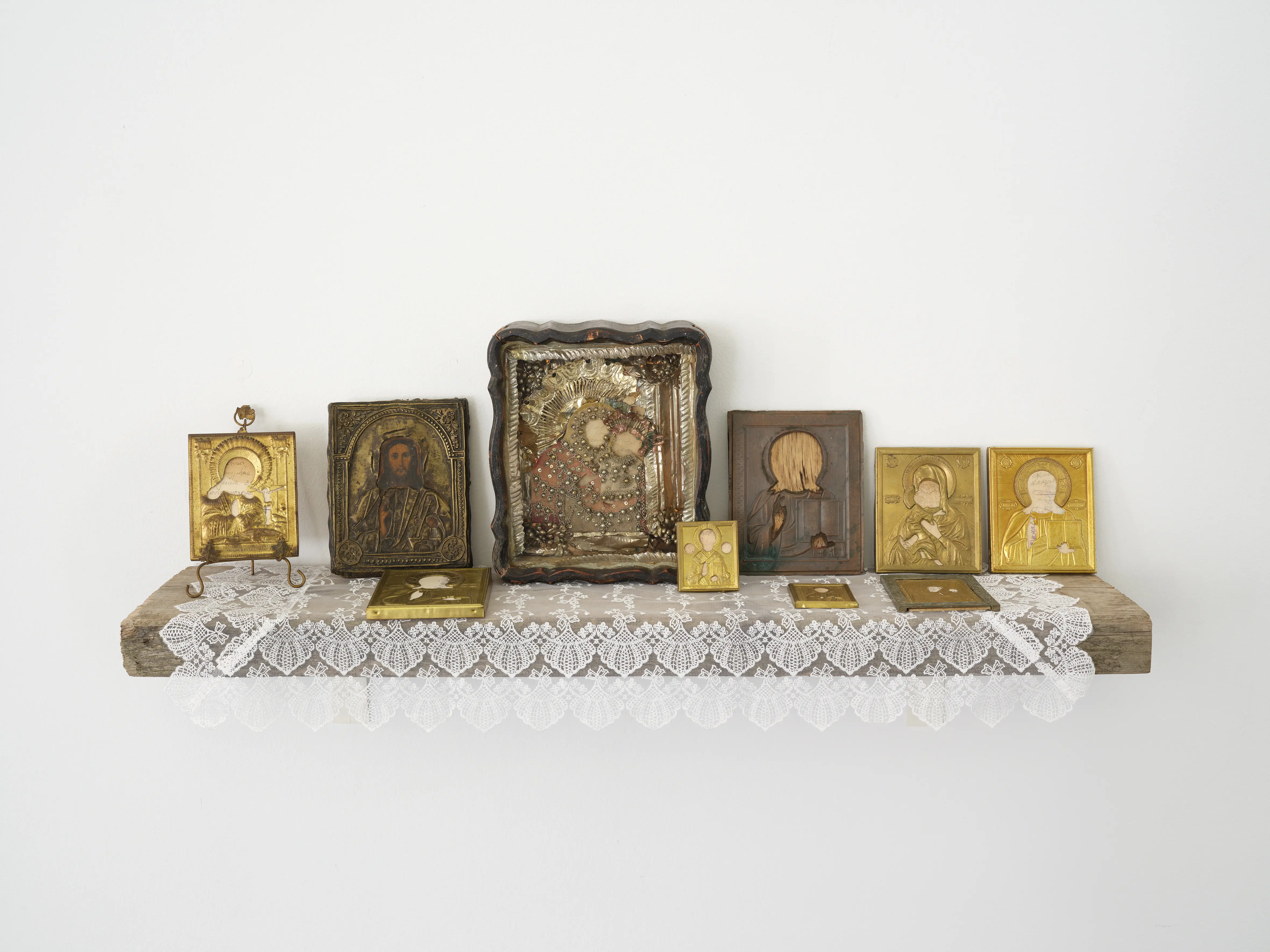
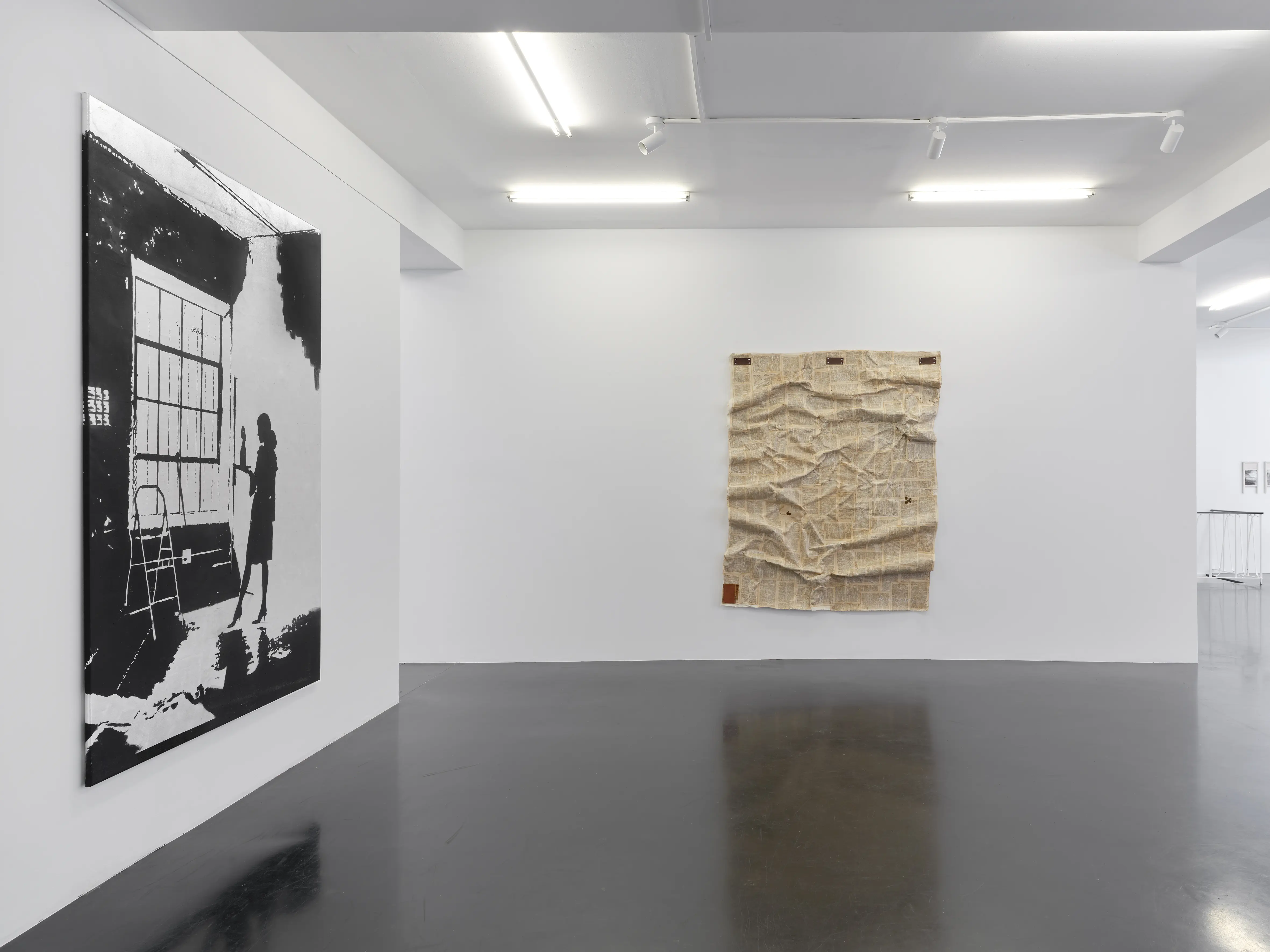
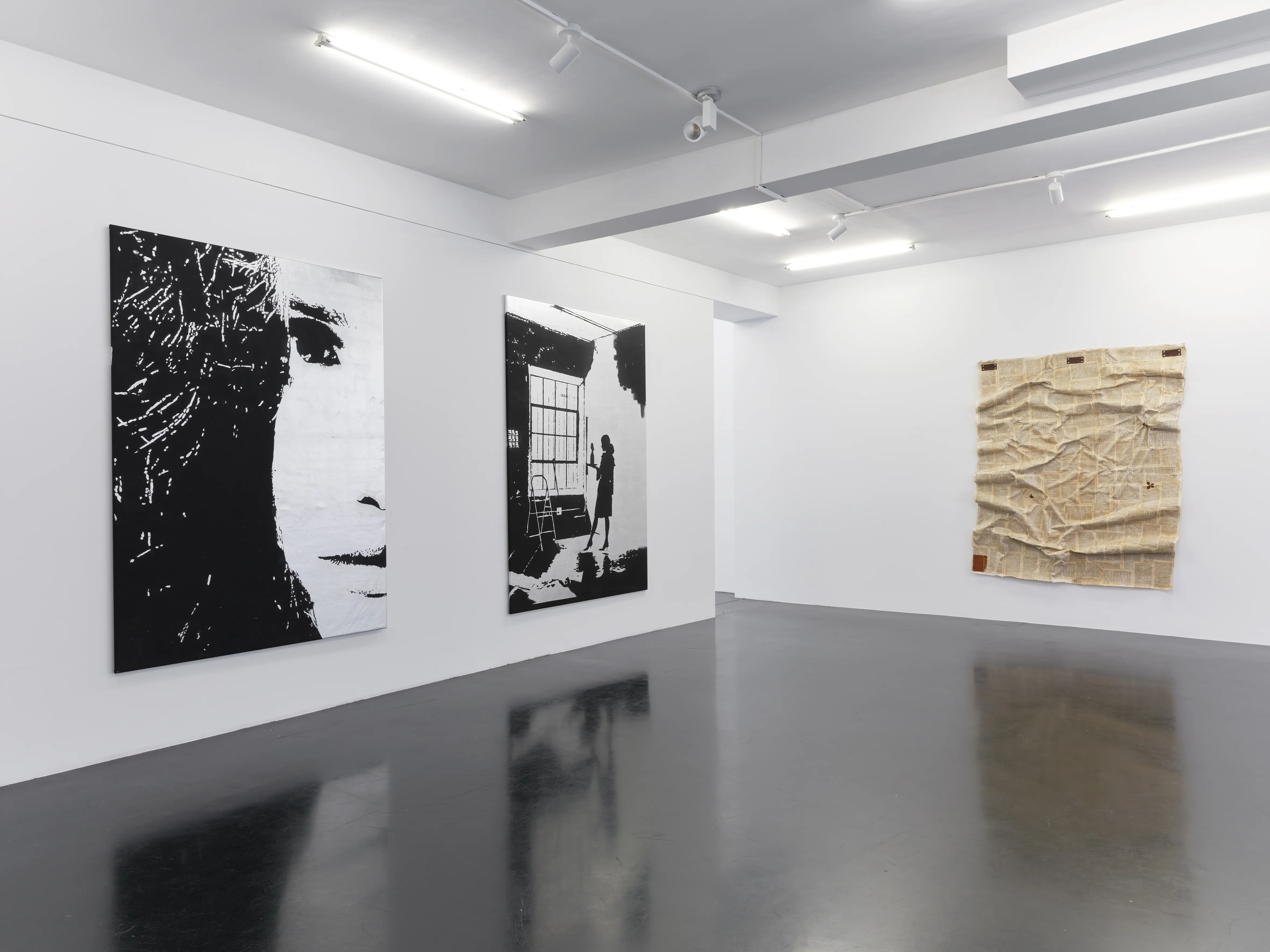
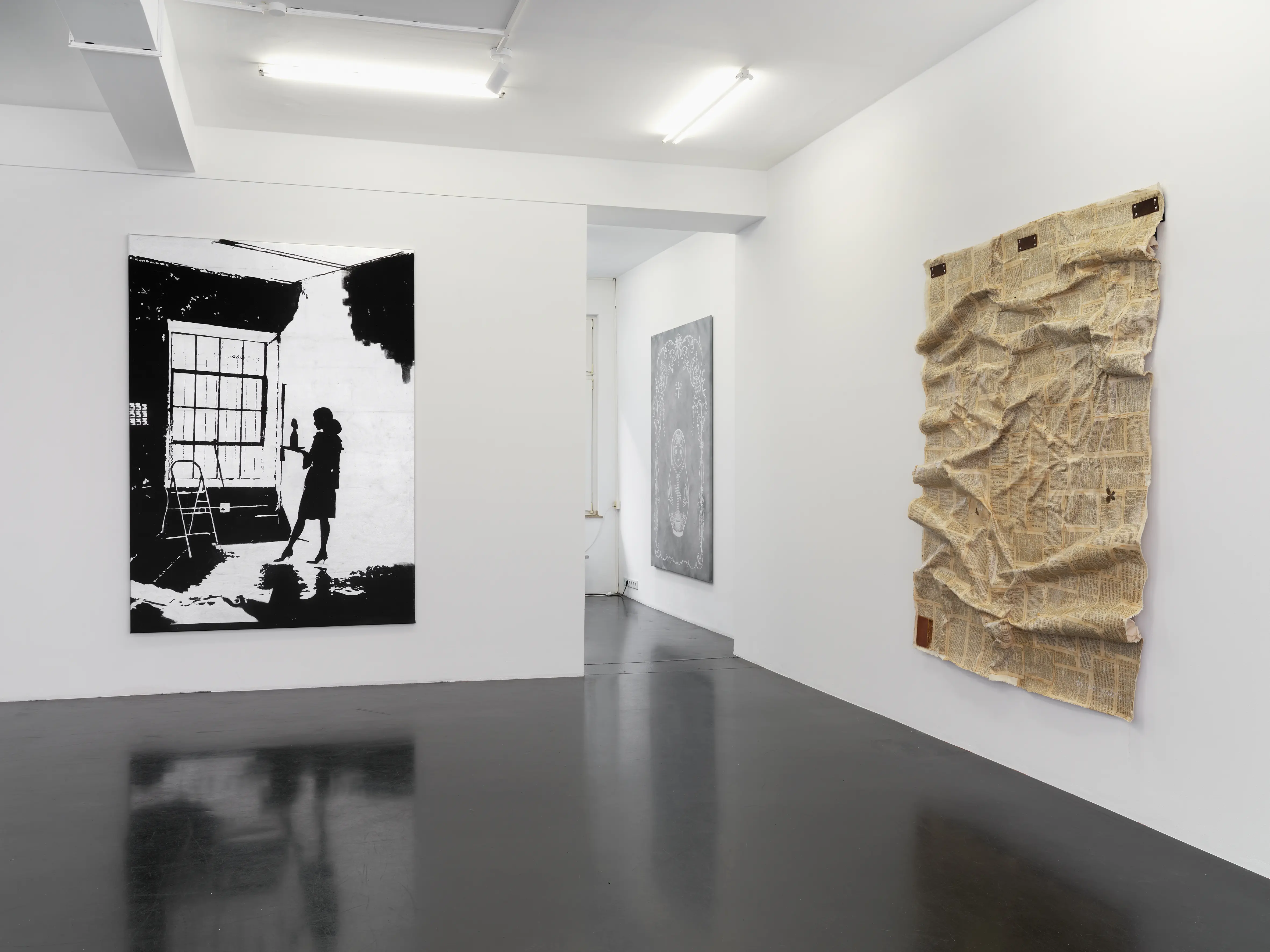
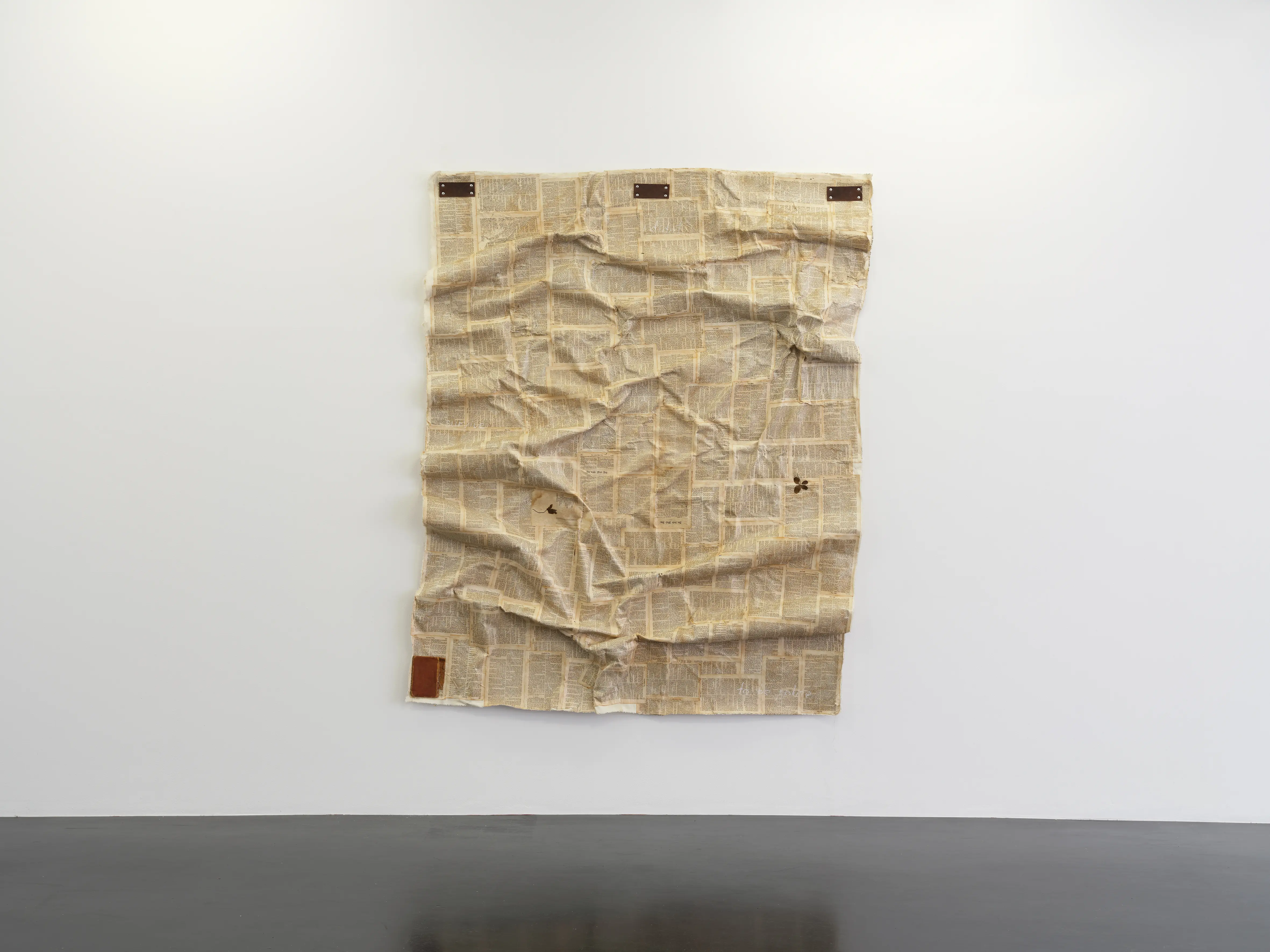
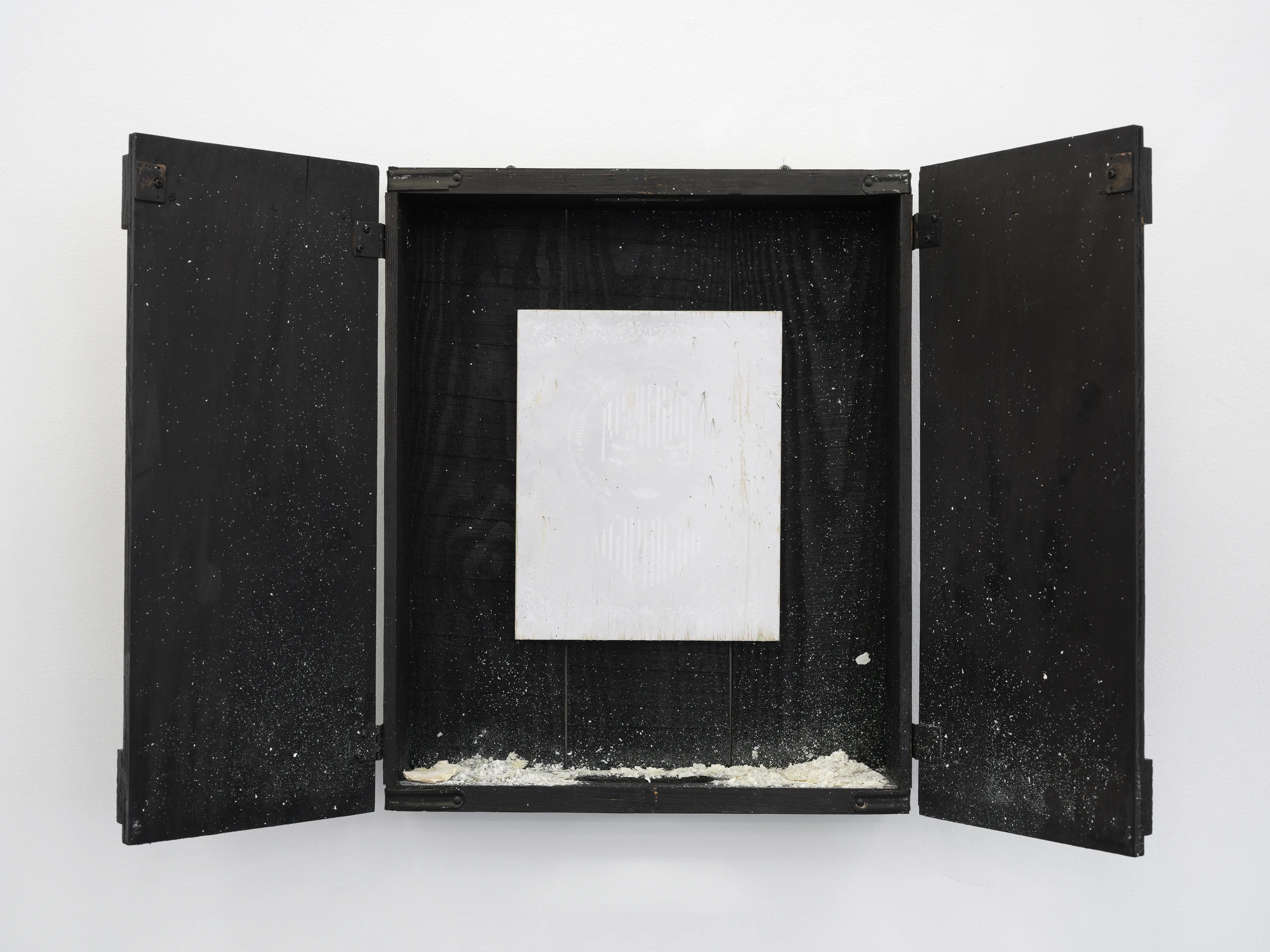
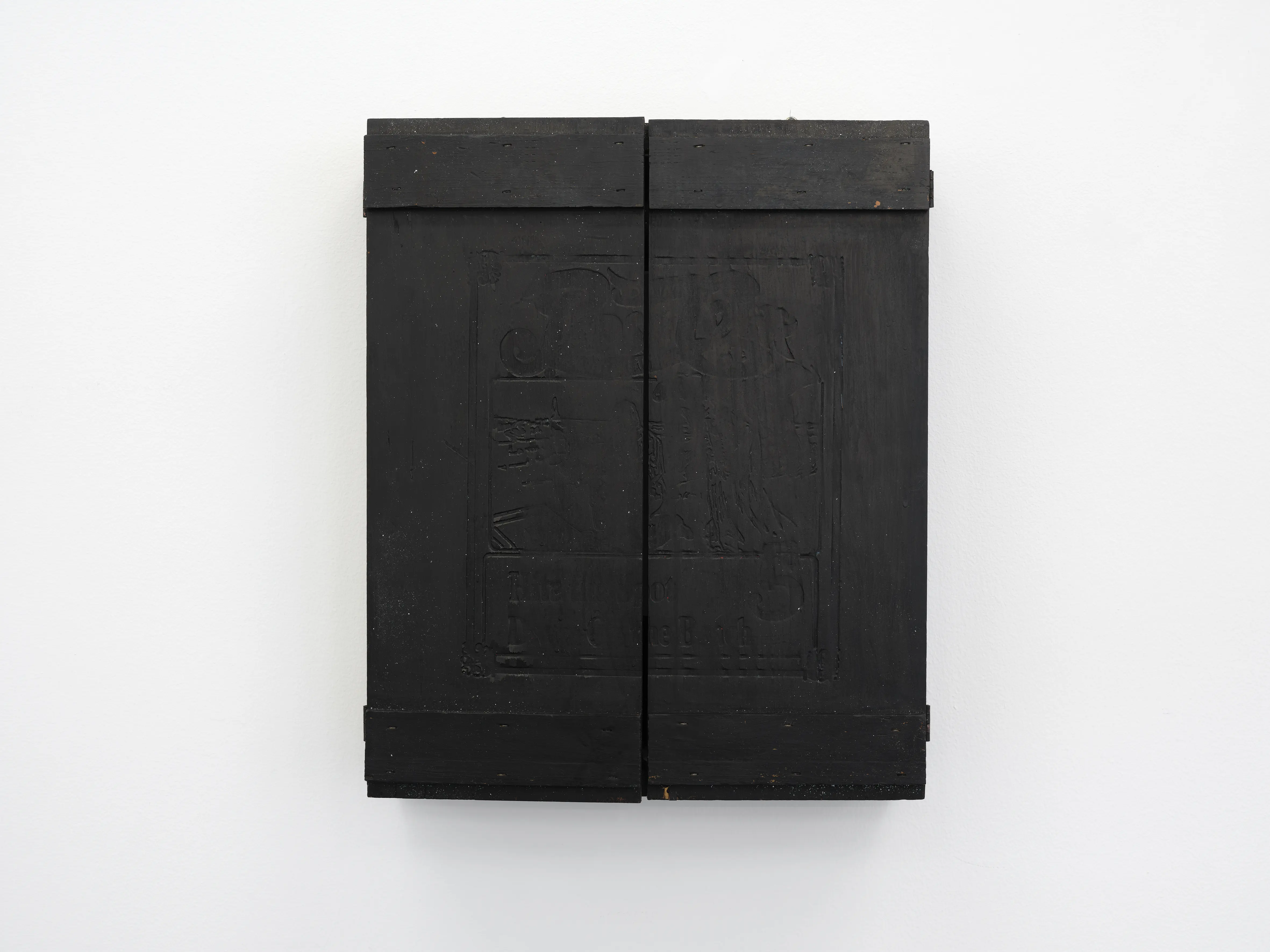
And now, in Cologne, in 2026? Her activist impulse migrates onto canvases and objects. The most explicit acts of iconoclasm appear in works such as SACRED CORNER—Orthodox icon reliefs from which Tolokonnikova has cut out the saints—or DUST (CABINET) and I DIDN’T SURVIVE TO BE POLITE (RELIEF), in which she either incinerates pages of Holy Scripture or glues them into a relief resembling a dirty, wrinkled blanket.
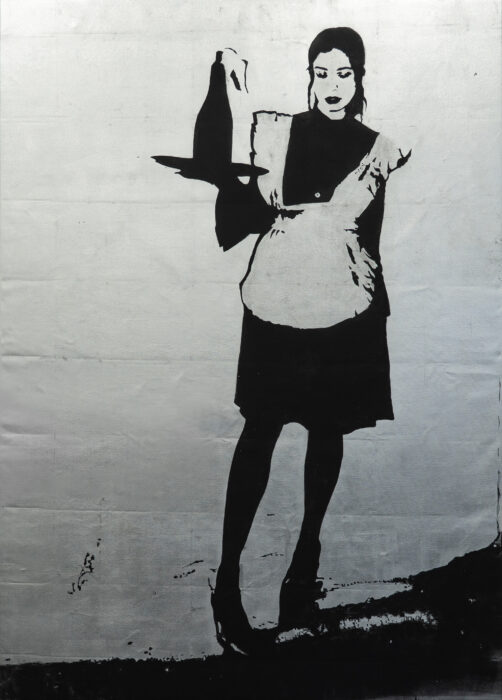
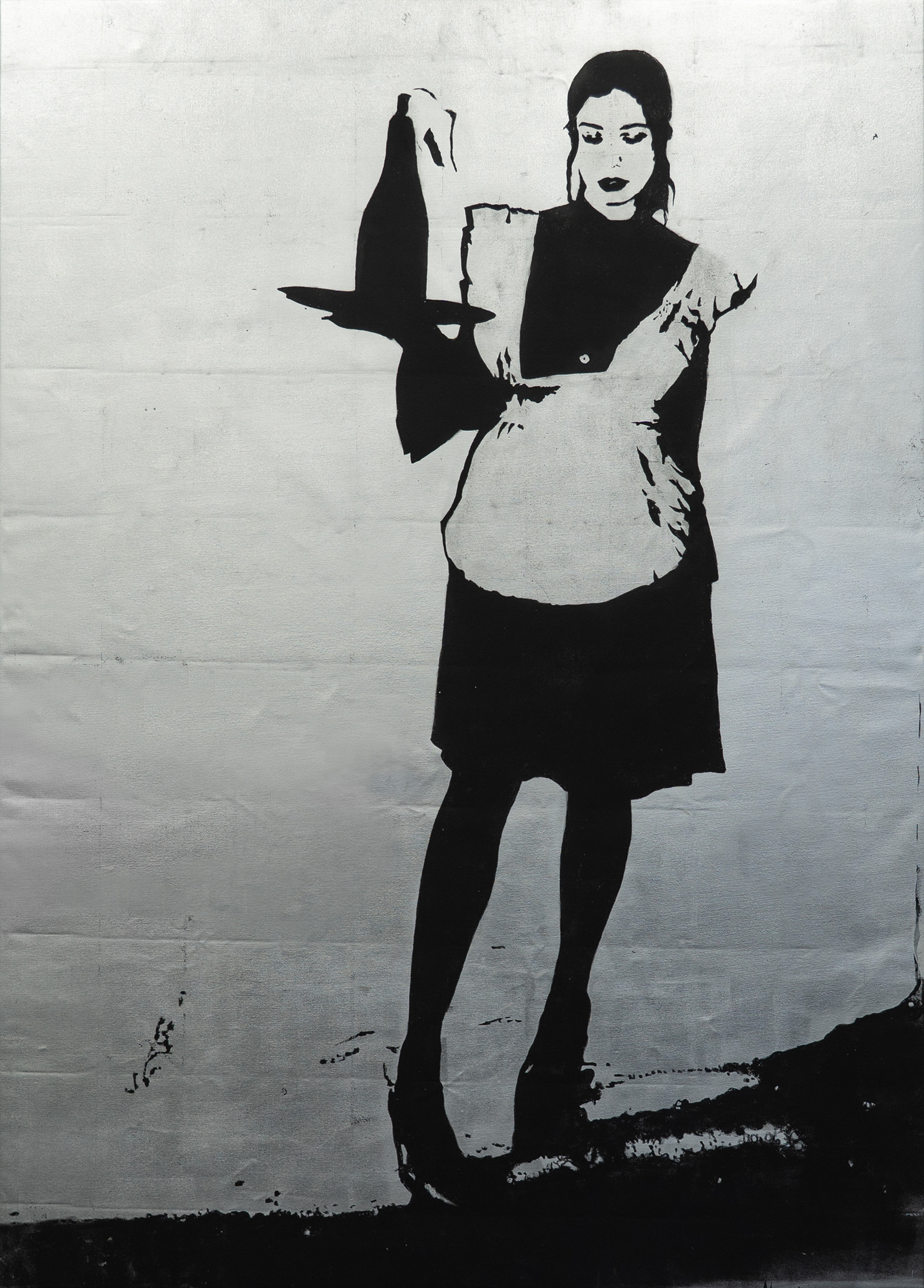
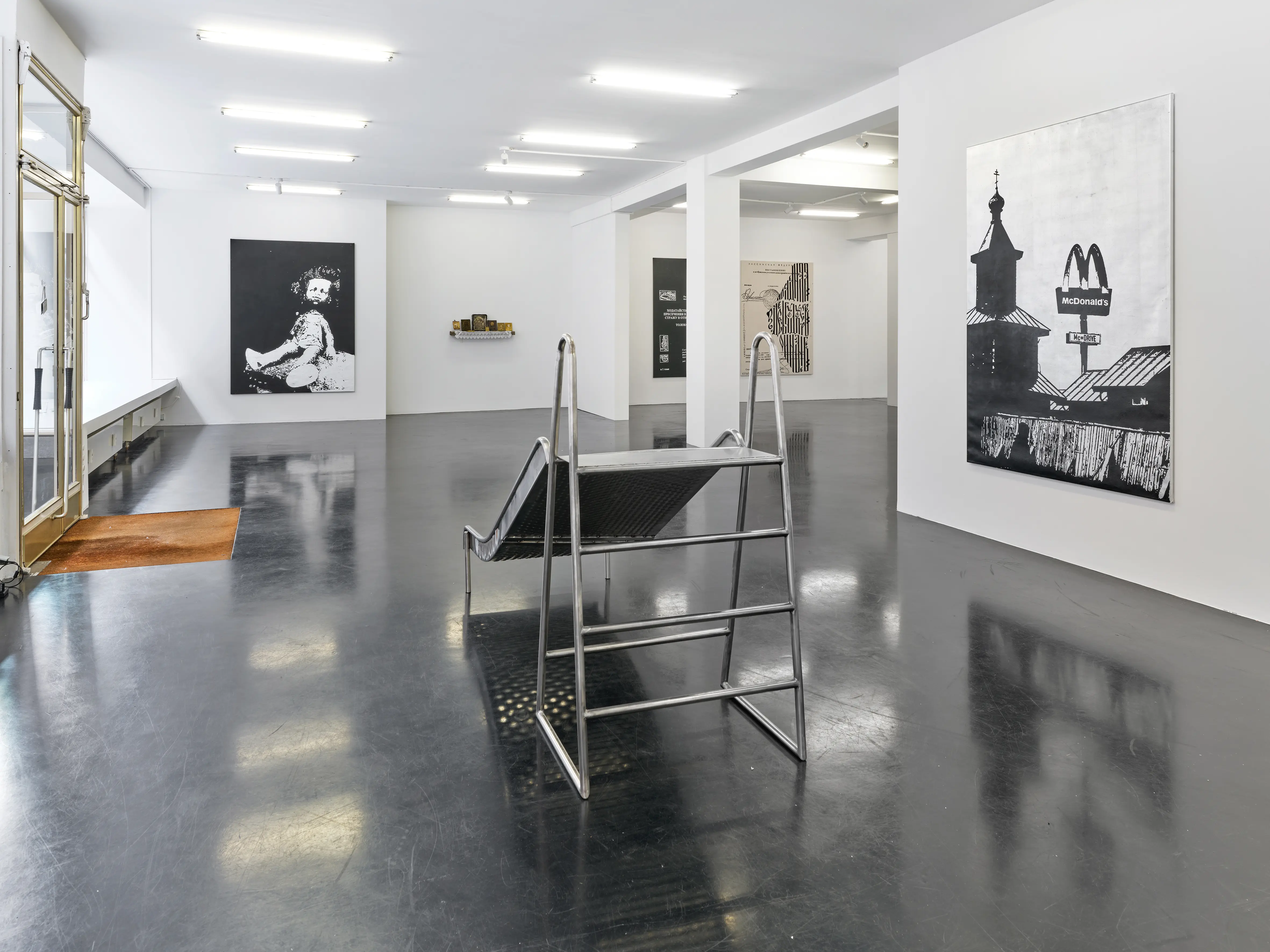
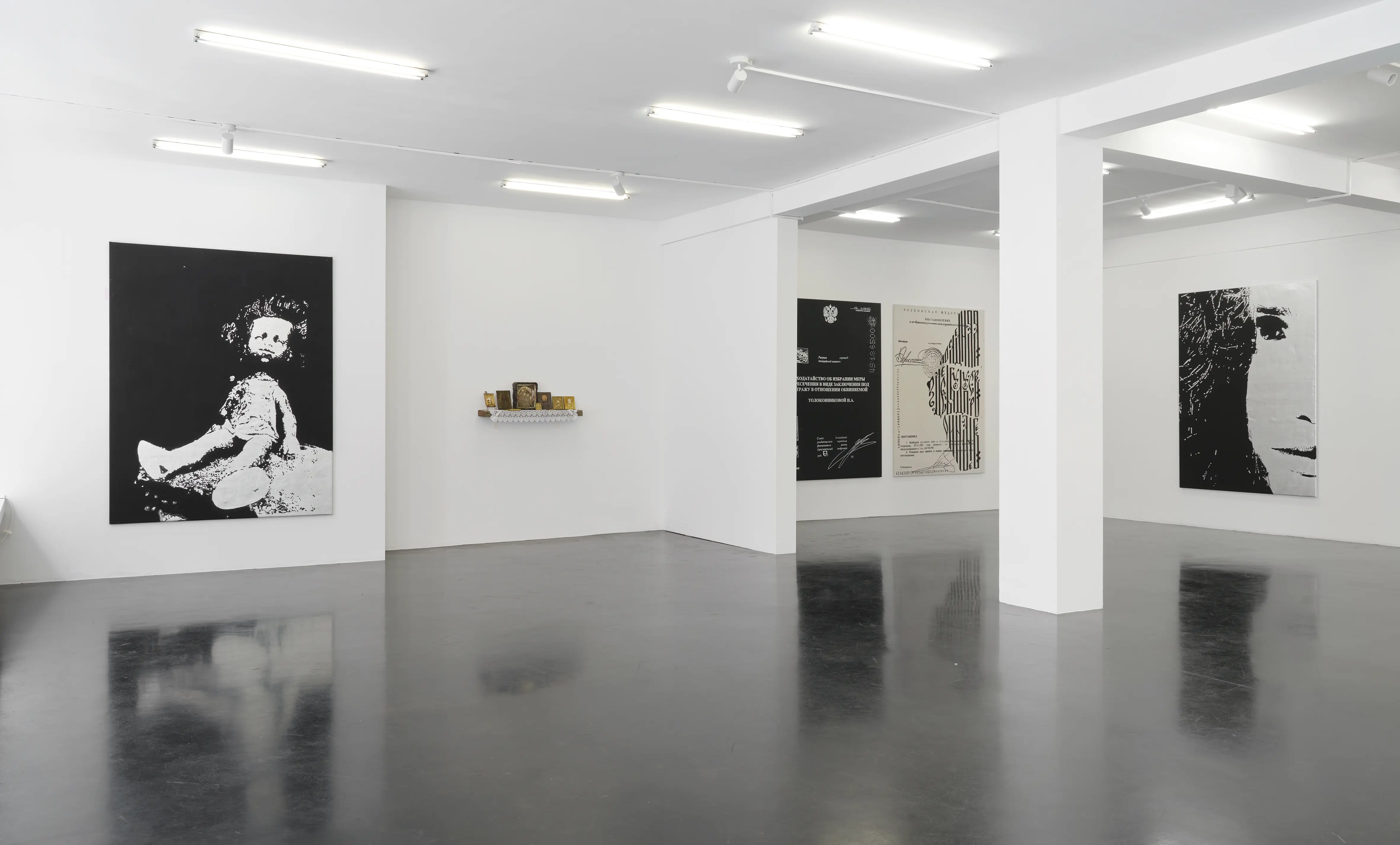
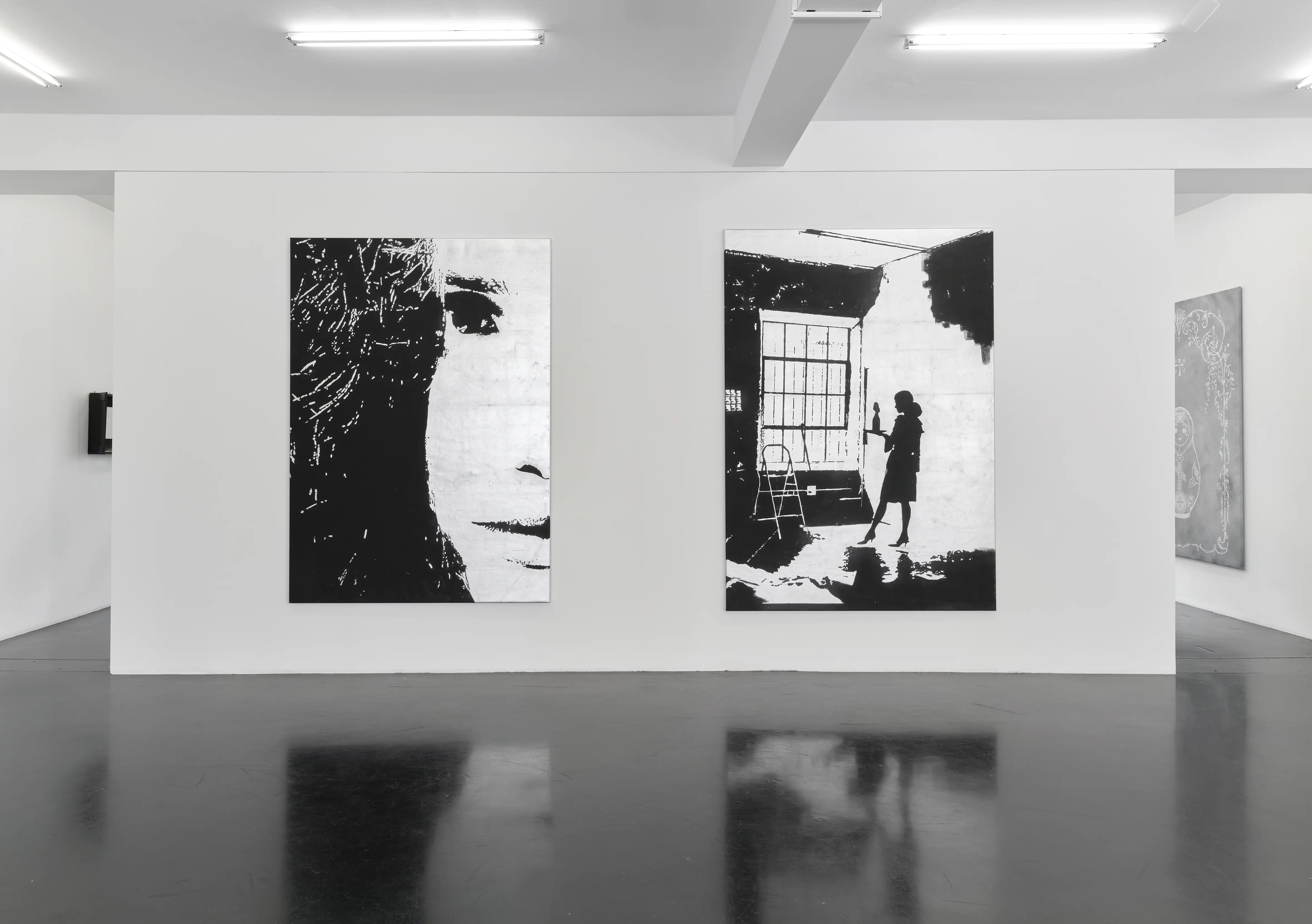
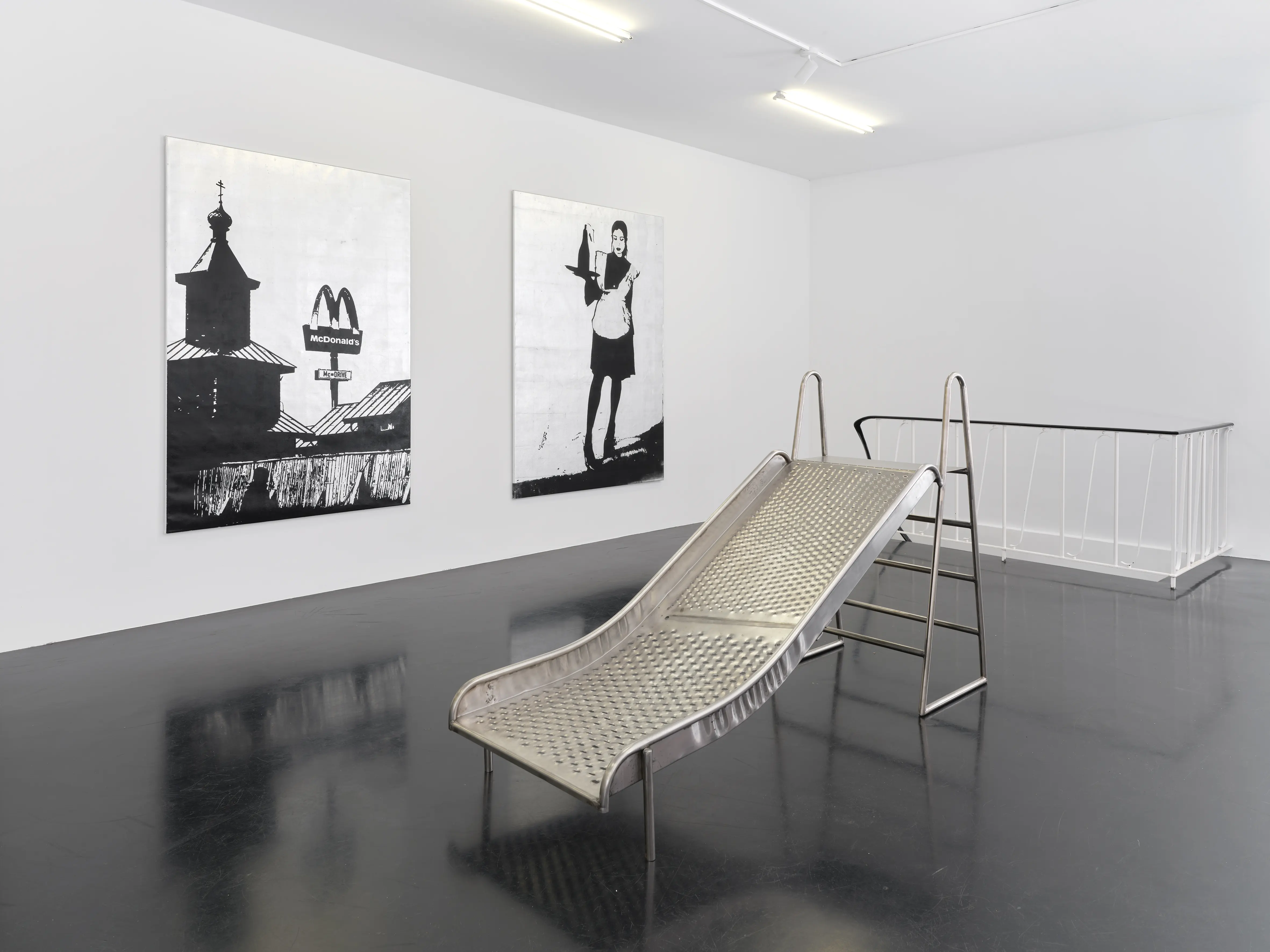
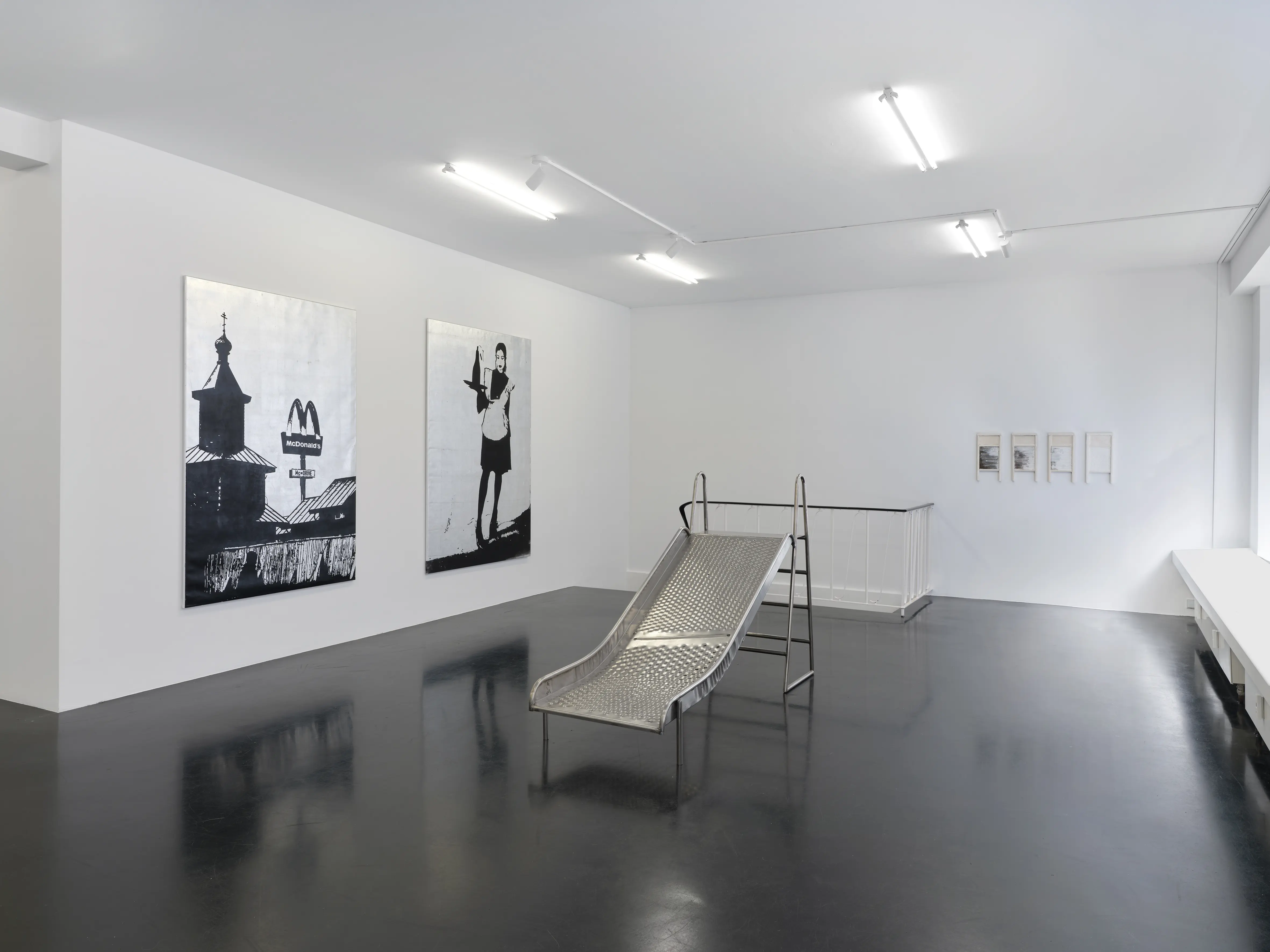
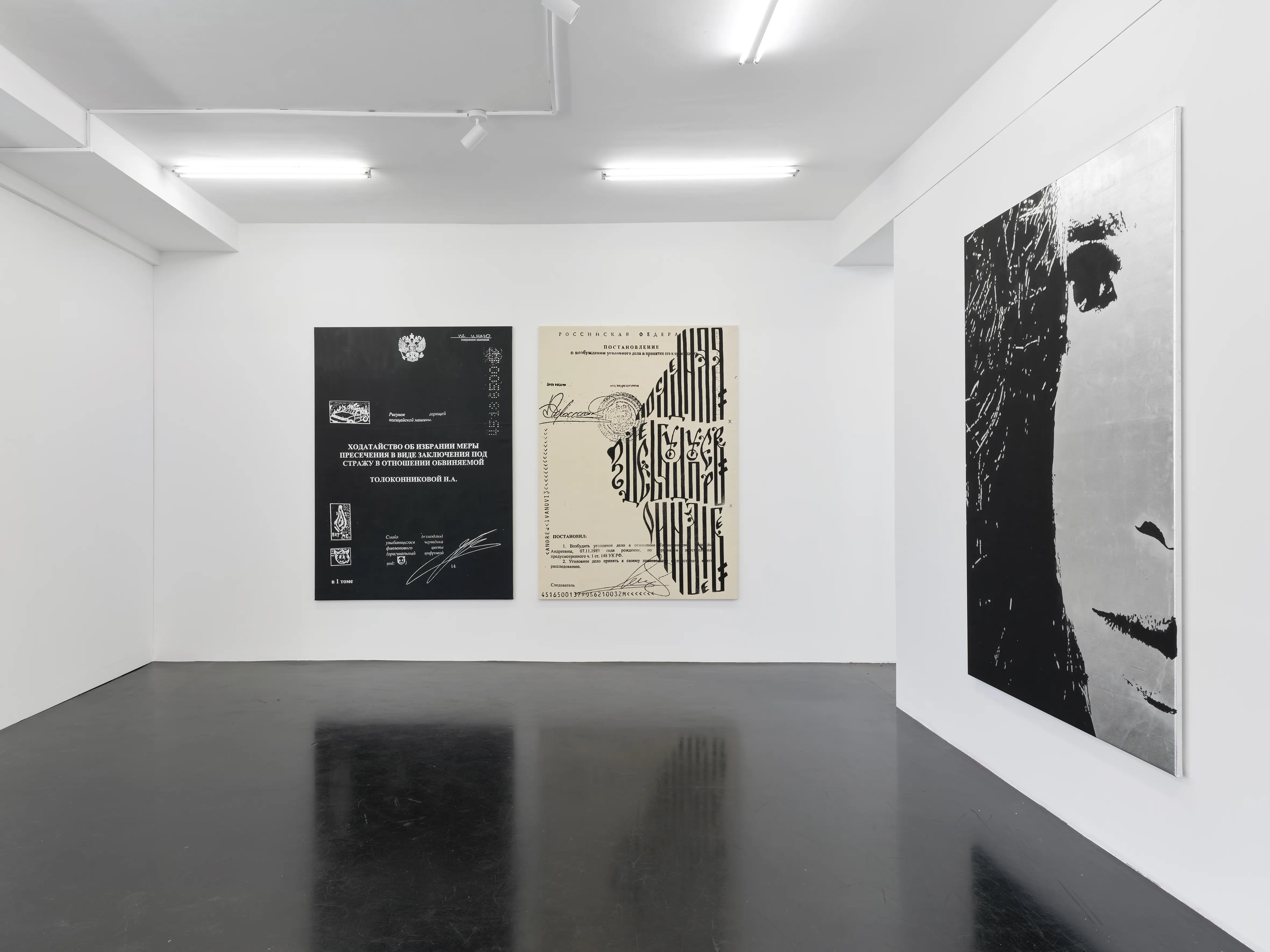
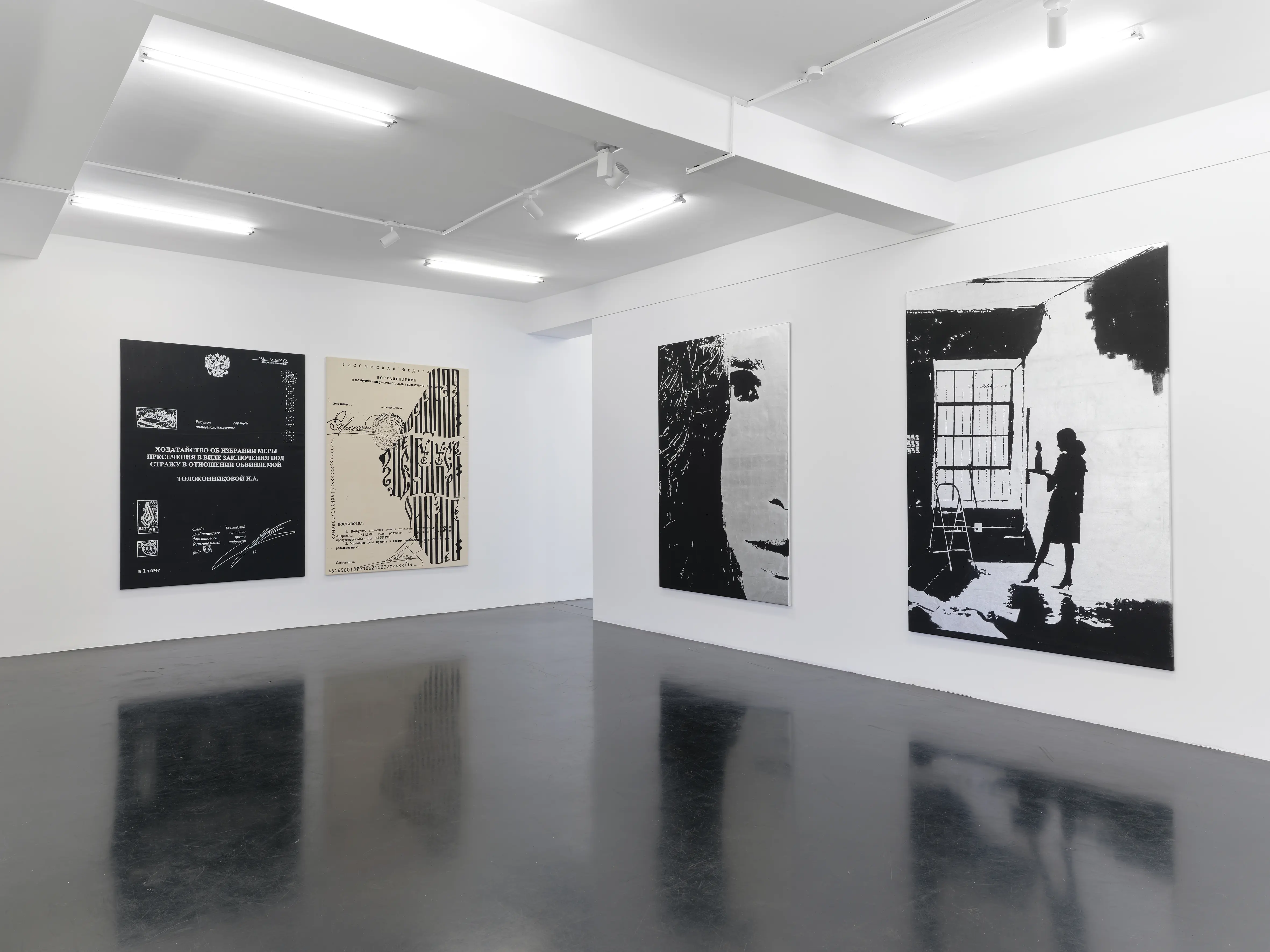
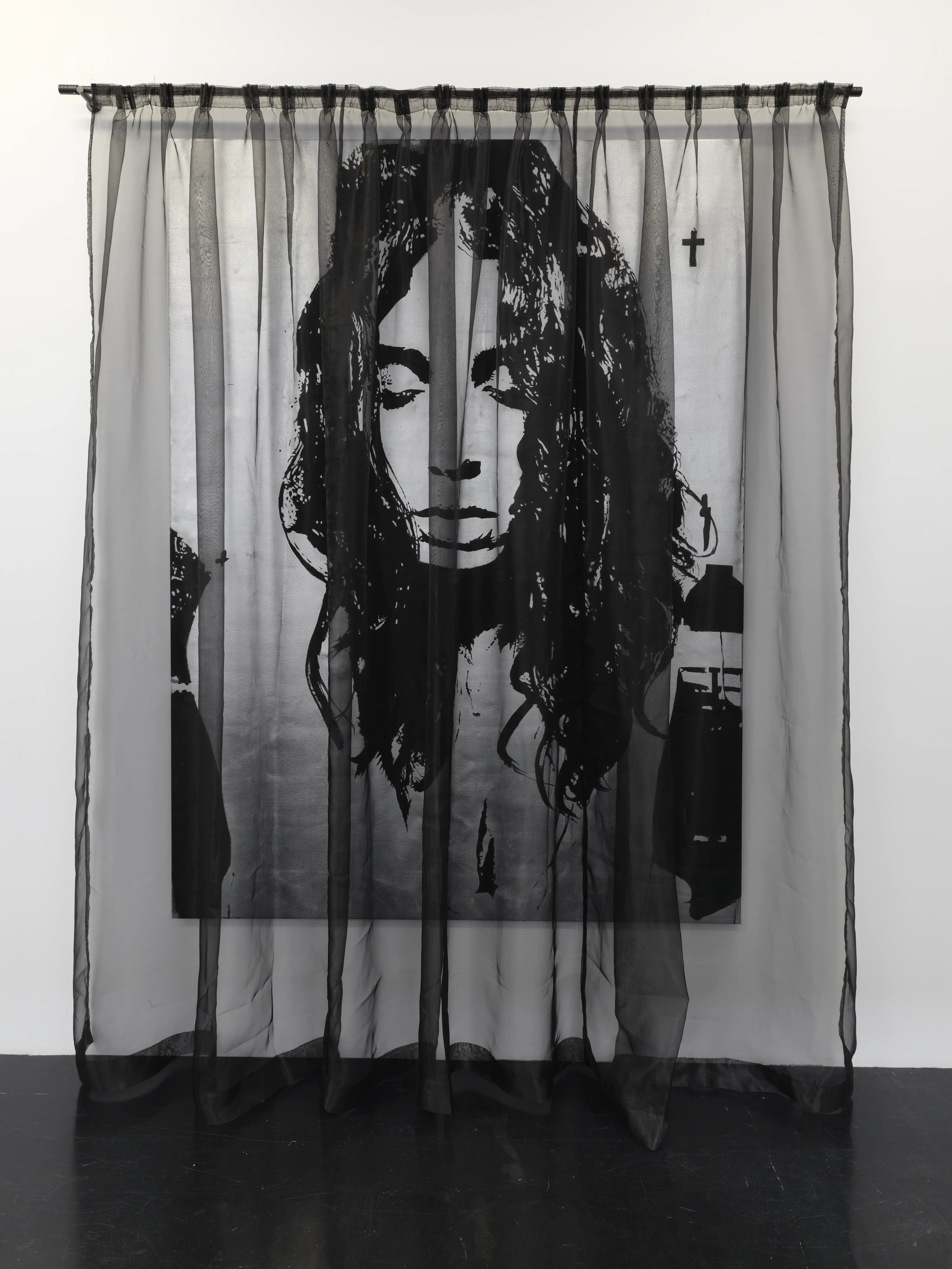
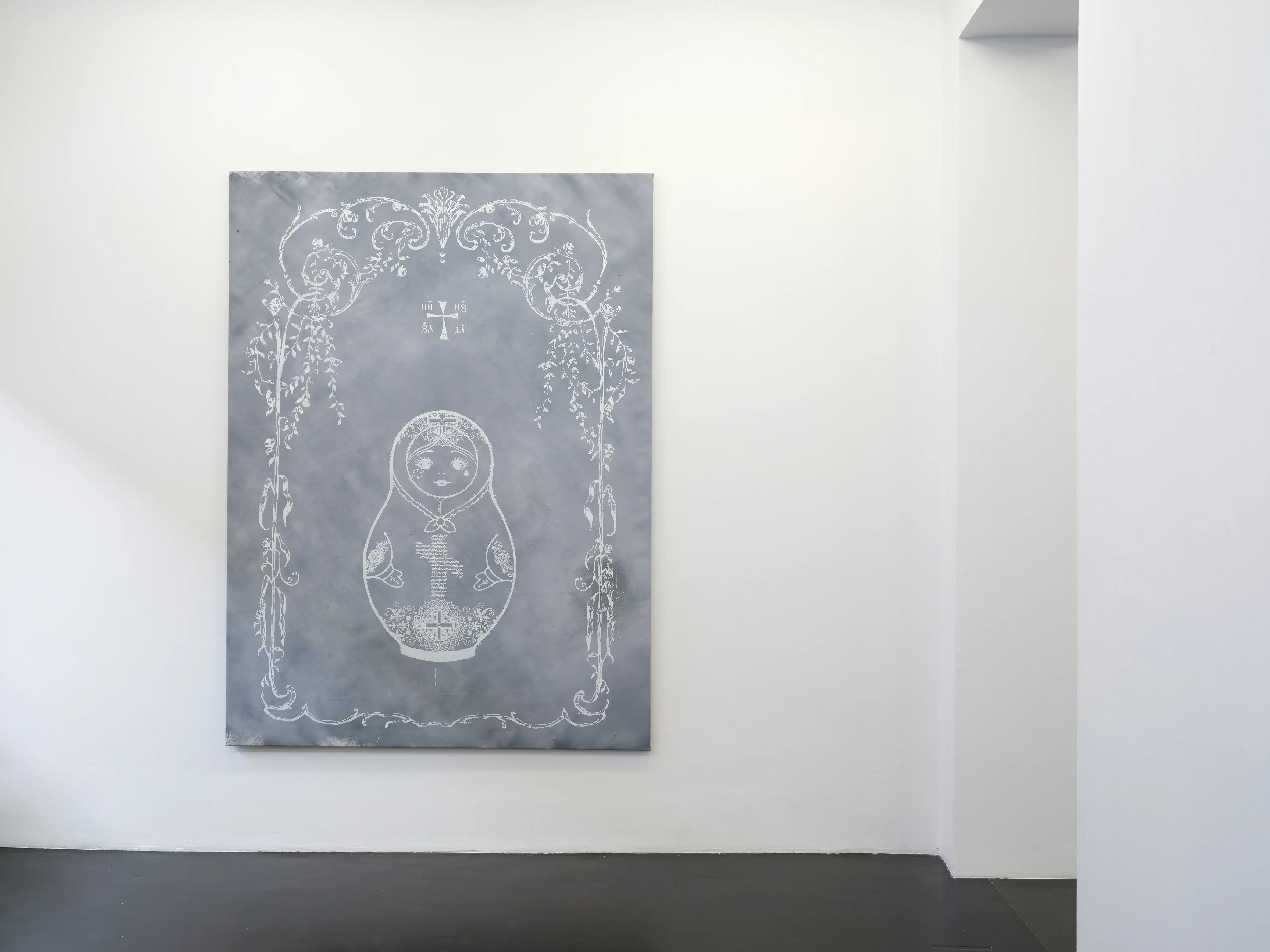
More delicate is the destructive game she plays with icons in her paintings. In works such as MOLOTOV SERVED, CHERNOBYL, and SYMBOL OF FAITH, it is the inconspicuous backgrounds, the very surfaces of the canvases, coated in fake silver leaf, that invoke the tradition of Russian Orthodox icon painting. In place of the saints who would normally occupy them, however, come images and symbols that can be understood as counter-images to what the anti-liberal fanatic Alexander Dugin once called russkiy mir—the “Russian world.” They are counter-images to Russia’s murderous imperial fantasy.
And, by virtue of their motifs and their simple visual language, they are themselves icons. Alternative icons. That is precisely where their contradiction with iconoclasm lies.
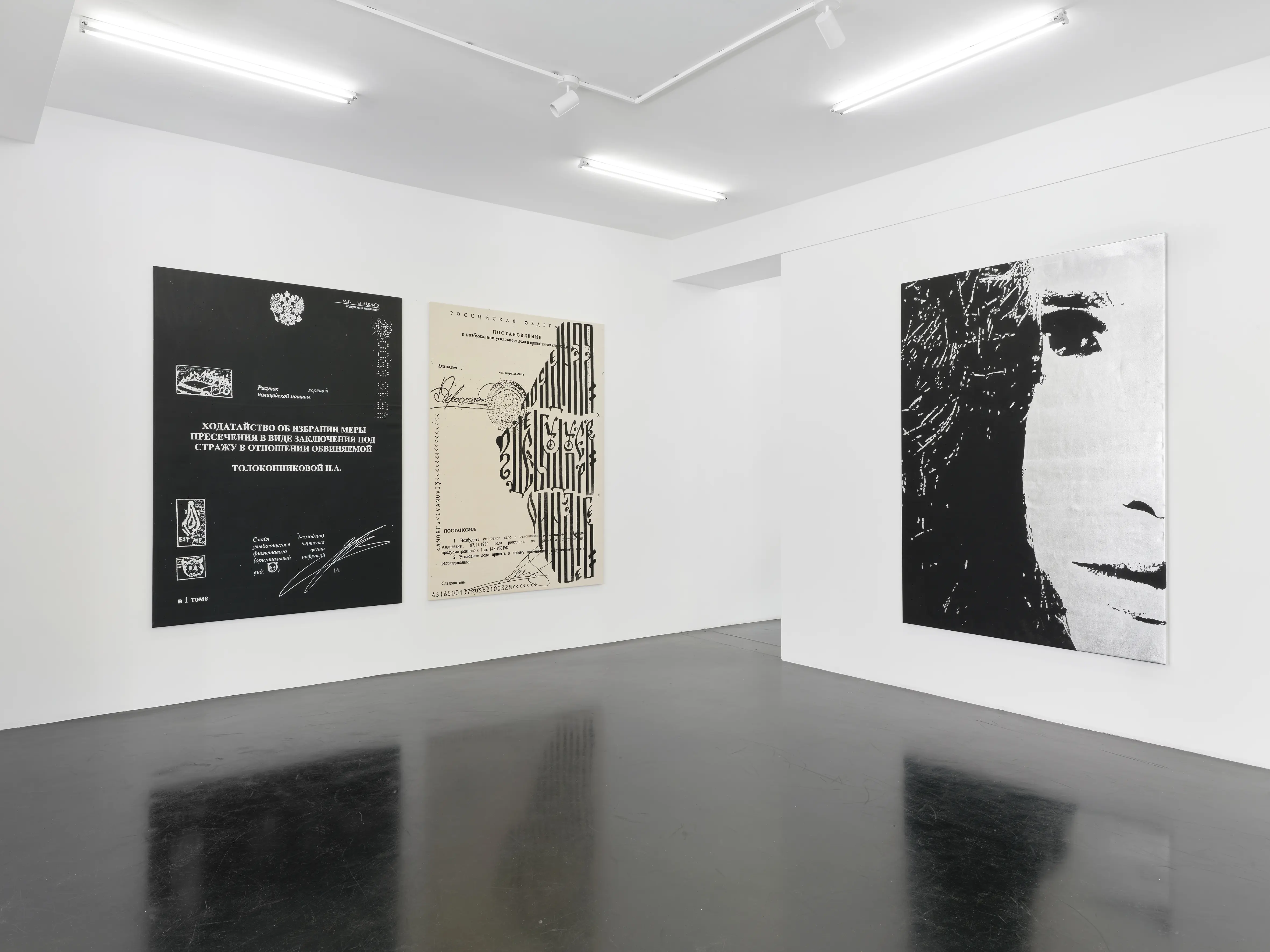
At first glance, these counter-images seem banal; as simple and immediately legible as the holy icons they have toppled from their thrones—or, better yet, ripped from their frames: Tolokonnikova’s face in extreme close-up; Molotov cocktails presented like Orthodox Christian insignia; a child’s doll abandoned in the nuclear wasteland of Chernobyl; the McDonald’s sign beside the onion-domed church tower.
Tolokonnikova’s icons become worthy of artistic worship only through the manner of their representation: the ghostly, schematic quality that recalls the coal-black traces of photographic negatives and the abstracting contrasts of the Kharkiv School of Photography; the marks left in the material, the artifacts of their making, that disrupt the image’s iconic simplicity. Taken together, these elements produce a distinctly negative, yet mystical image. As a counter-image, it functions like a dark but truthful funhouse mirror of Russian ideology and its imagery.
And then there is something else lurking inside these images and their contradictions. Something that may, in fact, even resolve the contradiction altogether.
Roland Barthes once wrote that “Pop Art reverses values,” citing Roy Lichtenstein as his witness, who said: “What characterizes pop is mainly its use of what is despised.” Pop Art, then, is blasphemous criticism and affirmation at once—a description that applies equally well to the contradiction at the heart of Tolokonnikova’s images. They are Pop Art in the best sense. One could be even more precise: Tolokonnikova belongs to the tradition of what Boris Groys once called Sots Art, the Soviet counterpart to Western Pop Art of the 1980s. It emerged around exiled artists such as Vitaly Komar and Alexander Melamid, who, from New York, turned their painterly appropriations of icons against the consumerism of the West as well as the agitprop and Orthodoxy of Soviet Russia. All of them share one thing: a desire to make the untouchably sacred—the bling-bling of power—profane again. By its own means.
Which brings me to the final, and not quite so profane, quality of Tolokonnikova’s exhibition: magic. Or, as she herself once put it, not entirely without irony: her “punk witchcraft.” Because alongside the devaluing appropriation of symbols of power, there is another form of appropriation at work in her pieces. Through her images, Tolokonnikova also reclaims the power to define her own history of persecution.
In her museum debut, RAGE, shown at OK Linz in 2024, and in WANTED, her first solo show at Nagel Draxler in Berlin last year, this took the form of a reconstruction of her prison cell as an immersive installation—clinically inventoried, almost like a work by Joseph Kosuth. Now, in Cologne, it is the seemingly banal depiction of her cell, or her self-staging as a state enemy and avenging angel. What she puts on display through this form of appropriation is not alone the profanity of the power that made her a pariah. It is the magical, subversive force of her own trivial icons – her counterpower. A line of text behind one of the removed saints in SACRED CORNER describes that force rather well: “This art puts you on Russia’s most wanted list.”
In a way, this also makes Tolokonnikova an alchemist. From the ideological garbage of the regime, from its profane materials, she amalgamates the gold of her art: her subversive wit. The internal contradiction between iconoclasm and iconophilia that I placed at the beginning of this text dissolves and is transformed into a screaming contradiction with the outside world—with the Russian World.
Nadya Tolokonnikova is many things, yes. Also, a pop-and-punk alchemist.
– Jonathan Guggenberger
Nadya Tolokonnikova ist vieles. Dissidentin und Popstar, Konzeptkünstlerin und Punk. Vor allem aber ist sie eines: eine Bilderstürmerin, die selbst Ikonen kreiert. Ein Widerspruch.
Dieser Widerspruch steht im Zentrum ihrer Ausstellung, hier, in Köln. Was er konkret bedeutet? Fangen wir mit dem einen Part davon, dem Ikonoklasmus an. In Tolokonnikovas Kunst ist er wortwörtlich zu nehmen. Das heißt, er zielt auf Ikonen ab – auf die der orthodoxen Kirche und auf die russischer Staatsideologie, den Führerkitsch Putins.
Schon 2012 performte Tolokonnikova mit Pussy Riot eines ihrer „Punk Prayer“-Konzerte in der Moskauer Christ-Erlöser-Kathedrale, dem größten Heiligtum der russischen Orthodoxie, die wiederum dem Kreml untertänig verbunden ist. Eine Entweihung von Hoheitssymbolen, so könnte man sagen, die zu Tolokonnikovas Verbannung führte, zu ihrer fast zweijährigen Haft in einem mordowischen Arbeitslager. 2023, da war sie schon im Exil, folgte PUTIN’S ASHES, eine Videoperformance, in der sie zusammen mit anderen maskierten Frauen ein Propaganda-Porträt des Diktators verbrannte und schließlich die Asche als ketzerische Reliquie zum Verkauf anbot. Auch dafür wurde sie bestraft. Der russische Staat, mittlerweile im Angriffskrieg auf die Ukraine, setzte Tolokonnikova auf seine internationale Fahndungsliste.
Und jetzt, 2026, in Köln? Ihr künstlerischer Aktionismus überträgt sich auf Leinwände und Objekte. Offensichtliche Bilderstürme finden sich hier in Werken wie SACRED CORNER – orthodoxen Ikonenreliefs, aus denen Tolokonnikova die Heiligenbilder herausgeschnitten hat – oder in DUST (CABINET) und I DIDN’T SURVIVE TO BE POLITE (RELIEF), in denen sie Buchseiten der Heiligen Schrift entweder einäschert oder zum Relief einer Falten werfenden, schmutzigen Bettdecke verklebt.
Zarter hingegen ist das zerstörerische Spiel mit den Ikonen in ihrer Malerei. In Arbeiten wie MOLOTOV SERVED, CHERNOBYL oder SYMBOL OF FAITH sind es die unscheinbaren Bildhintergründe, die Oberflächen der Leinwände, die mit Fake-Blattsilber belegt, auf die Tradition der russisch-orthodoxen Ikonenmalerei verweisen. An die Stelle der Heiligen, die dort sonst zu sehen sind, treten aber Bilder und Symbole, die man als Gegenbilder zu dem verstehen kann, was der antiliberale Fanatiker Alexander Dugin einmal „russkij mir“, also russische Welt genannt hat. Sie sind Gegenbilder zur mörderischen Großmachtfantasie Russlands.
Und sie sind, ihrer Motivik und einfachen Bildsprache nach, selbst Ikonen. Alternative Ikonen. Genau darin liegt ihr Widerspruch zum sonstigen Ikonoklasmus in Tolokonnikovas Kunst.
Auf den ersten Blick wirken diese Gegenbilder banal; so simpel und eingängig eben, wie die heiligen Ikonen, die sie von ihrem Thron oder, besser gesagt, aus dem Rahmen gestürzt haben Tolokonnikovas Gesicht in Großaufnahme sieht man da, Molotov-Cocktails, präsentiert wie orthodox-christliche Insignien; eine zurückgelassene Kinderpuppe im atomar verseuchten Tschernobyl; das McDonalds-Schild neben dem gezwiebelten Kirchturm.
Künstlerisch anbetungswürdig werden Tolokonnikovas Ikonen erst durch die Art ihrer Darstellung. Durch das Schemenhafte, das an die kohleschwarzen Abdrücke von Fotonegativen erinnert und an die abstrahierenden Kontraste der Charkiwer Schule der Fotografie; durch die Spuren im Material, die Artefakte der Bearbeitung, die das Bild in seiner ikonischen Einfachheit stören. Zusammengenommen ergeben diese Elemente einen mystisch-negativen Ausdruck. Im Sinne der Gegenbilder wirkt er wie ein düsterer, aber wahrhaftiger Zerrspiegel der russischen Ideologie und seiner manipulativen Bilder.
Und dann ist da noch was anderes, das in Tolokonnikovas Bildern und ihren Widersprüchen steckt. Etwas, das ihre Widersprüchlichkeit womöglich sogar auflöst.
Roland Barthes schrieb mal: „Pop Art verkehrt die Werte“ und zitierte als Kronzeugen Roy Lichtenstein, der sagte: „Was Pop vor allem ausmacht, ist der Gebrauch dessen, was verachtet wird.“ Pop Art ist also blasphemische Kritik und Affirmation zugleich, was auch auf den Widerspruch in Tolokonnikovas Bildern zutrifft. Sie sind Pop Art im besten Sinne. Man könnte sogar noch präziser sagen, Tolokonnikova steht in der Tradition einer Strömung, die Boris Groys einmal „Sots Art“ nannte: das sowjetische 80er-Jahre-Pendant zur westlichen Pop Art, bestehend aus exilierten Künstlern wie Vitaly Komar und Alexander Melamid, die sich von New York aus mit ihren malerisch angeeigneten Ikonen am Consumerism der Staaten wie auch am Agitprop und der Orthodoxie Sowjetrusslands abarbeiteten. Eines verbindet alle: Sie wollen das unantastbar Heilige – das Bling-Bling der Macht – wieder profan machen. Mit seinen eigenen Mitteln.
Was mich zur letzten, gar nicht so profanen Eigenschaft von Tolokonnikovas Ausstellung bringt: der Magie. Oder, wie sie selbst einmal, nicht ganz ohne Ironie, sagte: ihre Punk-Hexenkunst. Denn neben der entwertenden Aneignung von Machtsymbolen gibt es in ihren Arbeiten auch noch eine zweite Form der Aneignung. Mit ihren Bildern holt sich Tolokonnikova auch die Definitionsmacht über ihre eigene Verfolgungsgeschichte zurück.
Bei ihrem Museumsdebüt RAGE, das 2024 im OK Linz zu sehen war, oder in WANTED, ihrer ersten Solo-Show bei Nagel Draxler in Berlin im letzten Jahr, war es der Nachbau ihrer Gefängniszelle als begehbare Installation – sachlich inventarisiert wie ein Werk von Joseph Kosuth. Jetzt, in Köln, sind es die scheinbar banalen Malereien ihrer Zelle oder die Selbstinszenierung als Staatsfeindin und Racheengel. Was sie in dieser Form der Aneignung ausstellt, ist nicht allein die Profanität der Macht, die sie zum Paria gemacht hat. Es ist die magisch-subversive Wirkung von Tolokonnikovas eigenen Trivialikonen – ihre Gegenmacht. Was genau deren Wirkung ist, beschreibt ein Schriftzug hinter einer der entfernten Heiligenfiguren in SACRED CORNER ganz gut: „This art puts you on Russia’s most wanted list.“
Ein wenig macht das Tolokonnikova auch zur Alchemistin. Aus dem Ideologiemüll des Regimes, seinen profanen Mitteln, amalgamiert sie das Gold ihrer Kunst: ihren subversiven Witz. Der innere Widerspruch zwischen Bildersturm und Bilderliebe, den ich hier an den Anfang gestellt hatte, löst sich dabei auf und verwandelt sich in den schreienden Widerspruch gegen das Außen – die russische Welt.
Nadya Tolokonnikova ist vieles, ja. Auch eine Pop-und-Punk-Alchemistin.
– Jonathan Guggenberger