
Huang Rui 《89》 Ink-stained books
02/05/2026 – 27/06/2026
Nagel Draxler Kabinett
Rosa-Luxemburg-Straße 33
10178 Berlin
Eröffnung / Opening:
Freitag, Mai 1, 2026, 18 – 21 Uhr
Friday, May 1, 2026, 6 – 9pm
Öffnungszeiten / Opening hours:
Dienstag - Freitag 11 – 18 Uhr, Samstag 12 – 18 Uhr
Tuesday - Friday 11am – 6pm, Saturday 12 – 6pm
Besondere Öffnungszeiten während des Berlin Gallery Weekends /
Special Opening hours during Berlin Gallery Weekend:
Samstag, 2. Mai 2026, 11 – 18 Uhr, Saturday, May 2, 2026, 11am – 6pm
Sonntag, 3. Mai 2026, 11 – 18 Uhr, Sunday, May 3, 2026, 11am – 6pm
Press Release
*Please scroll down for the German version.*
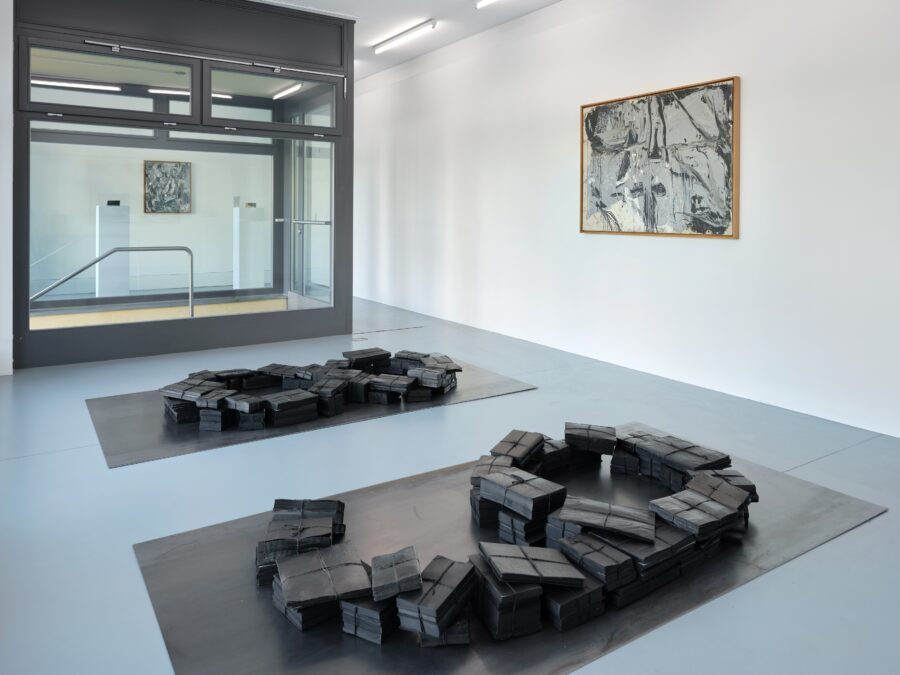
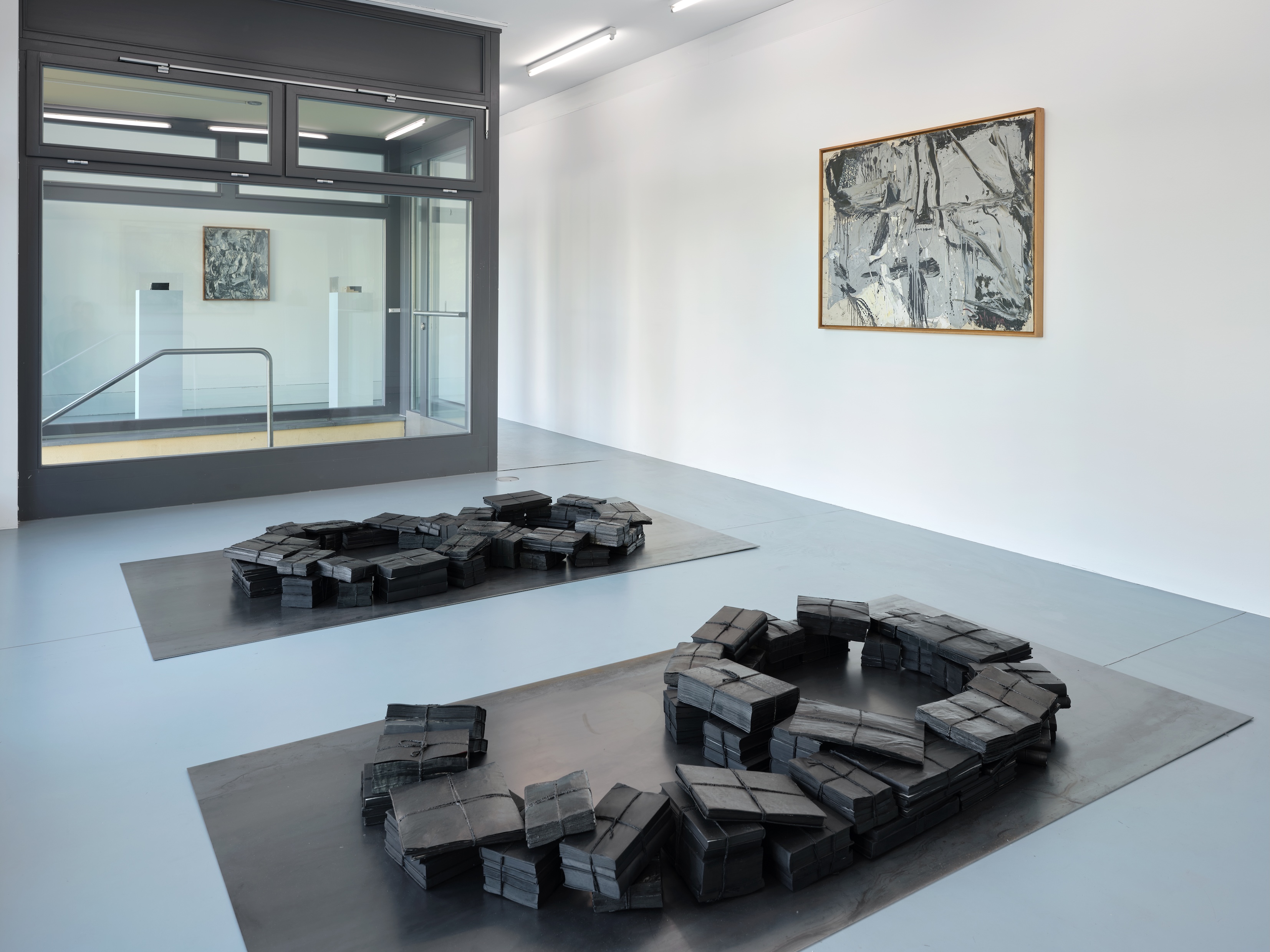
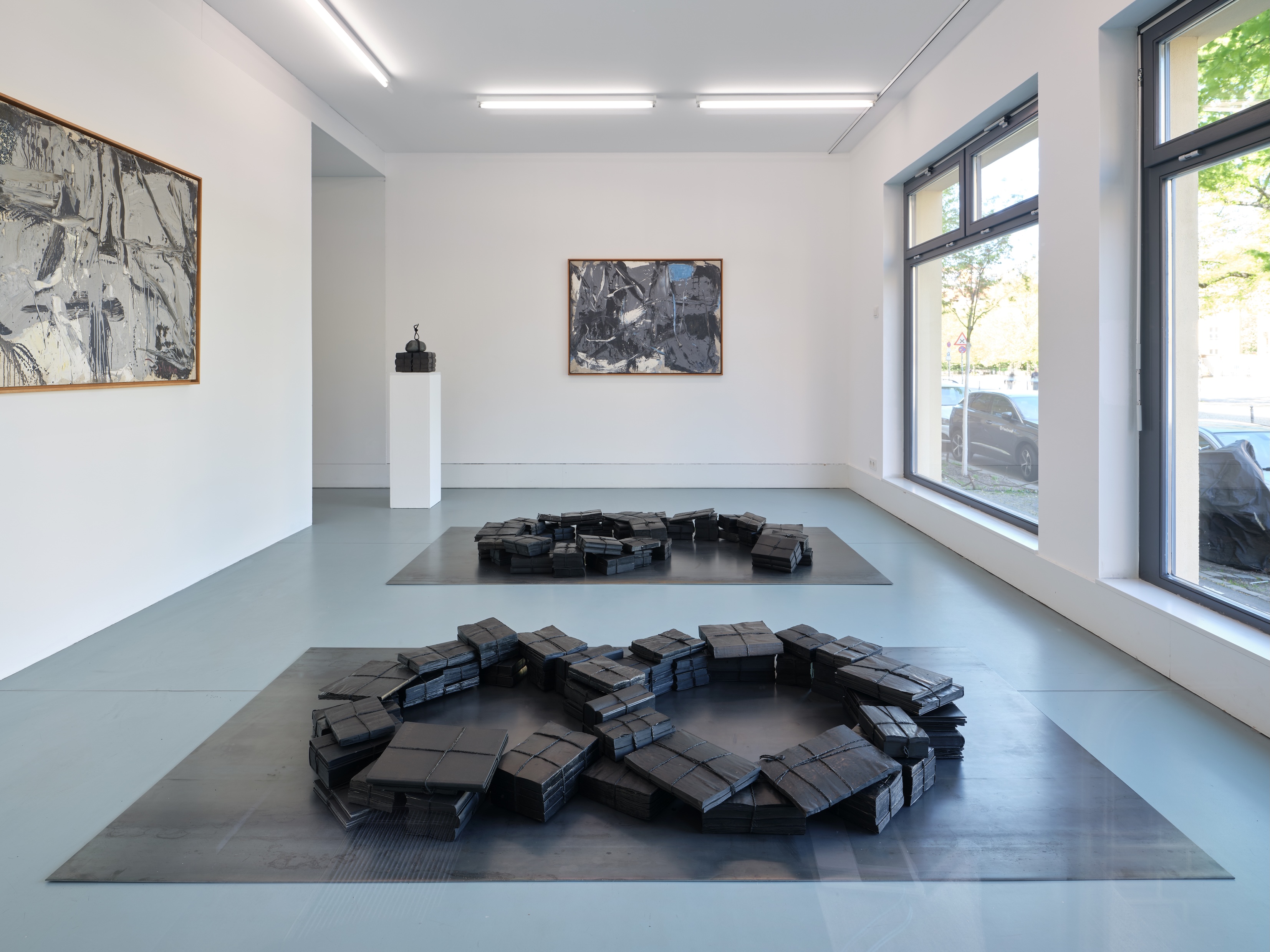
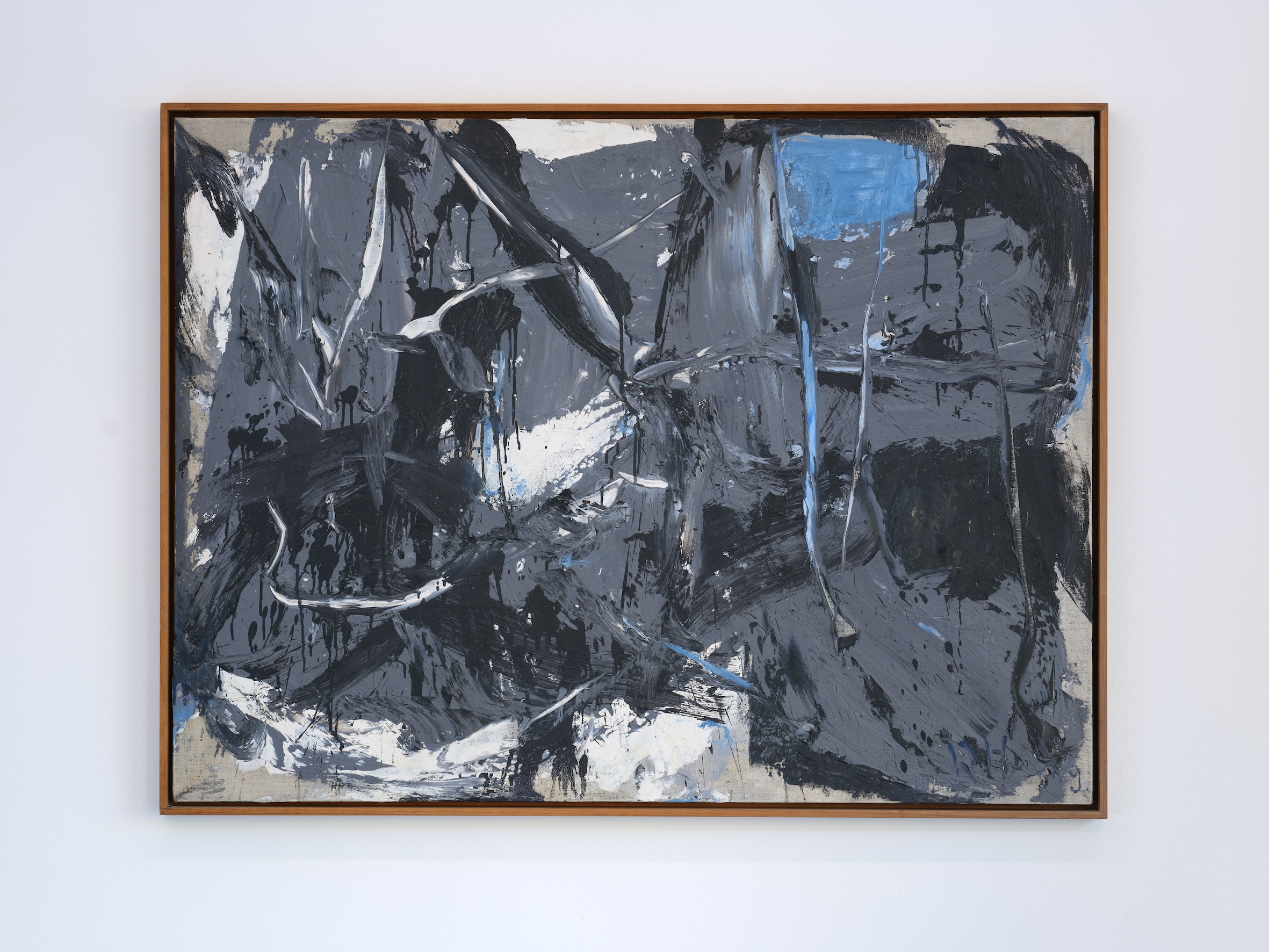
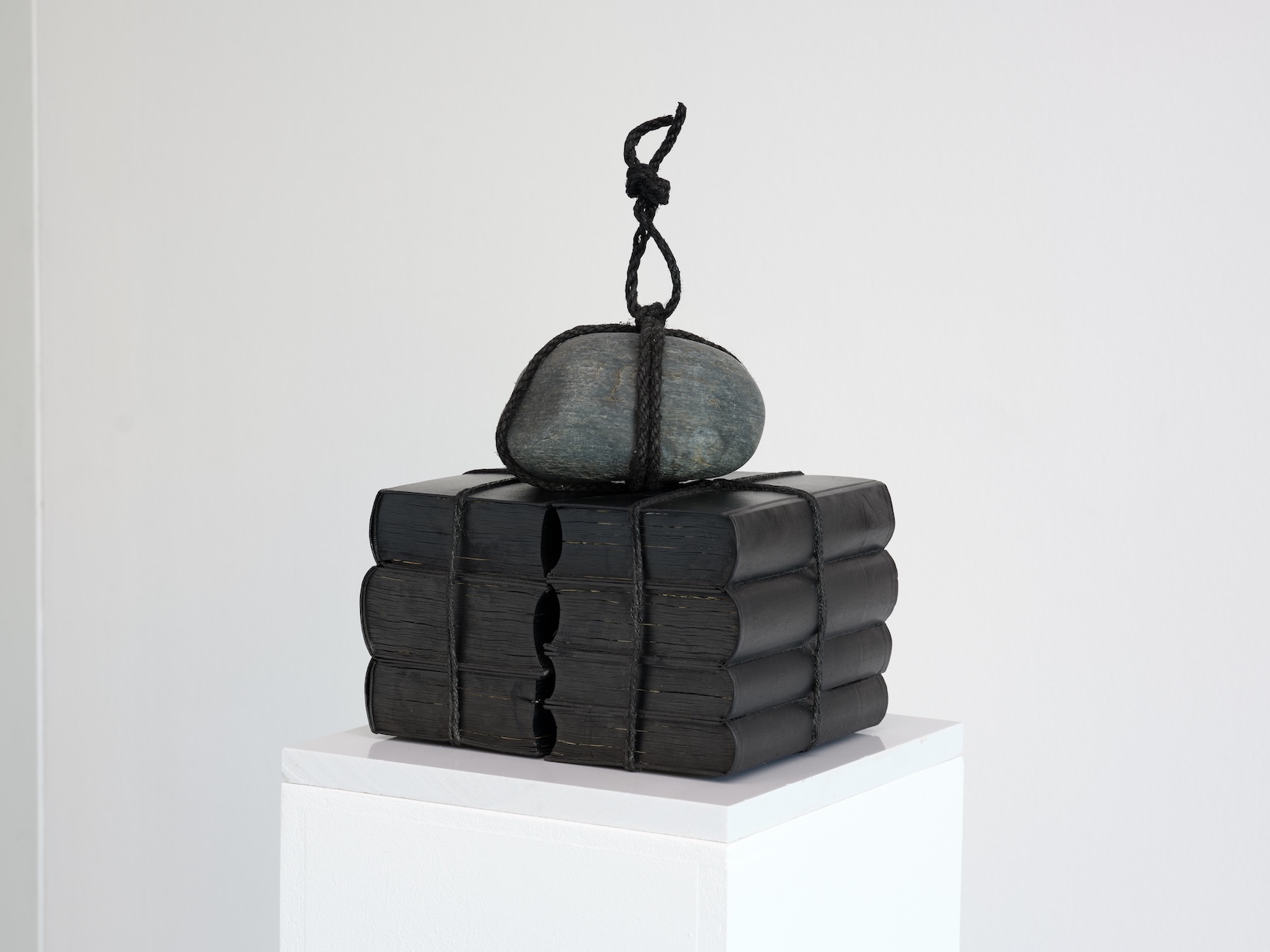
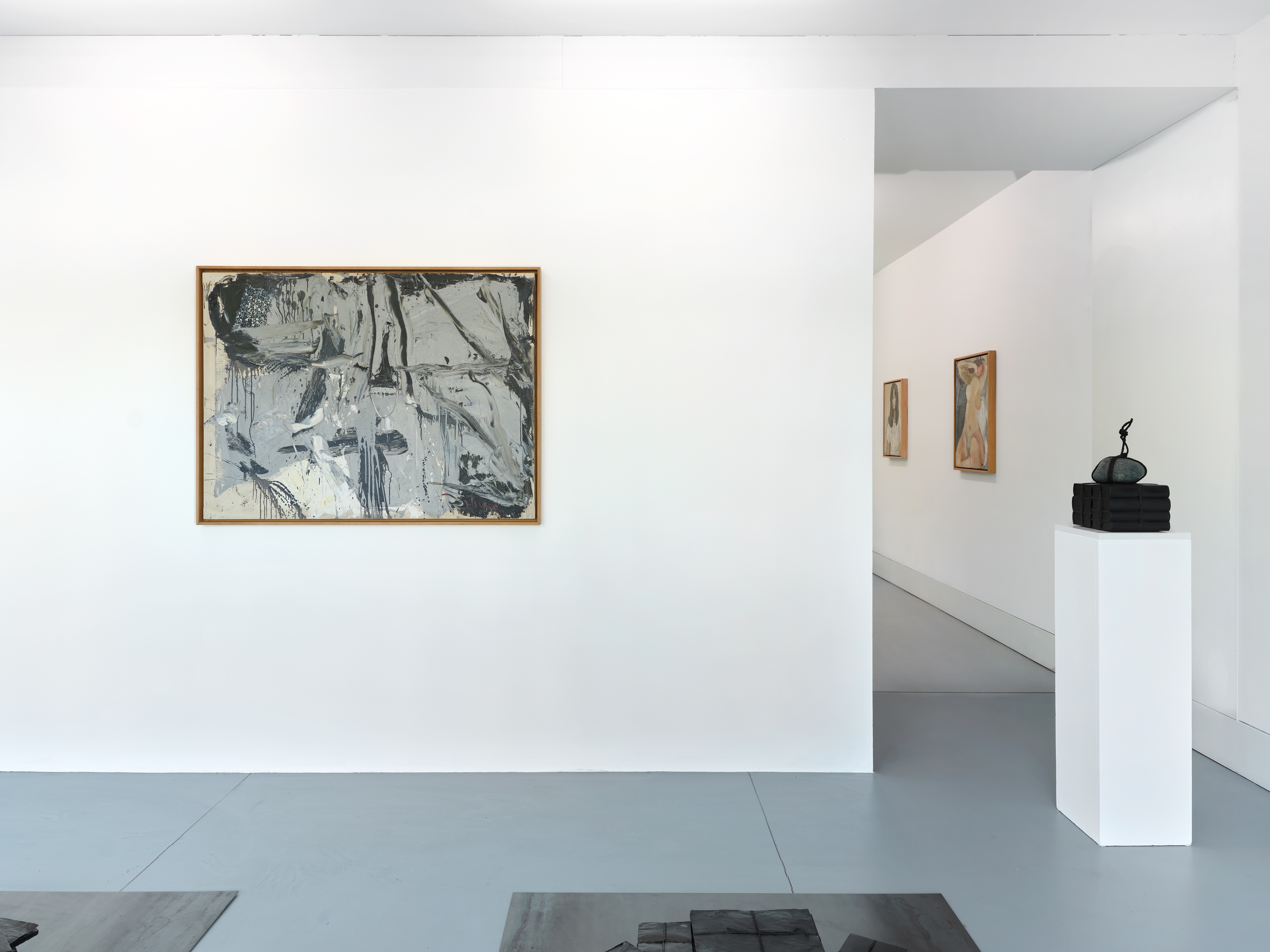
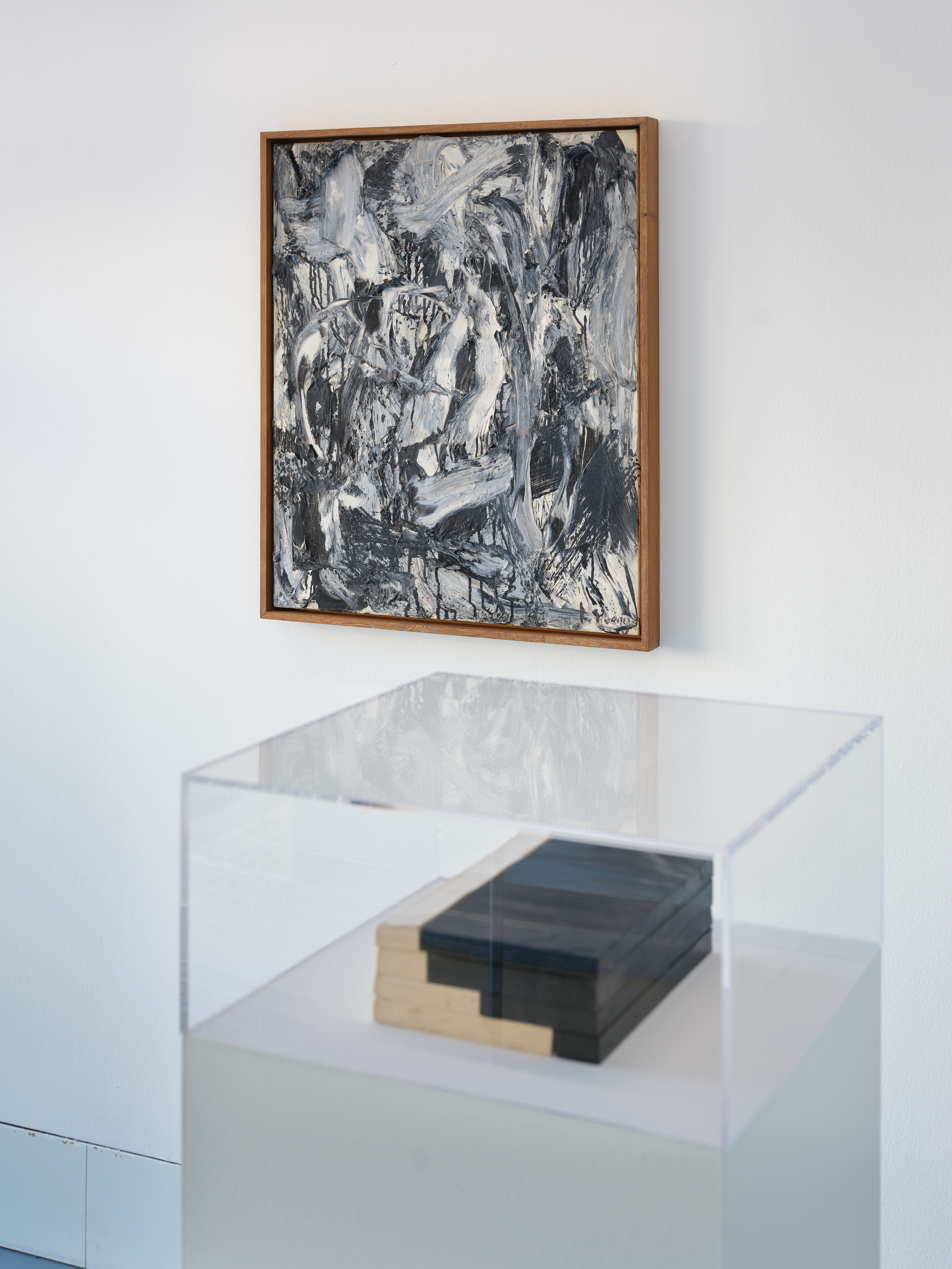
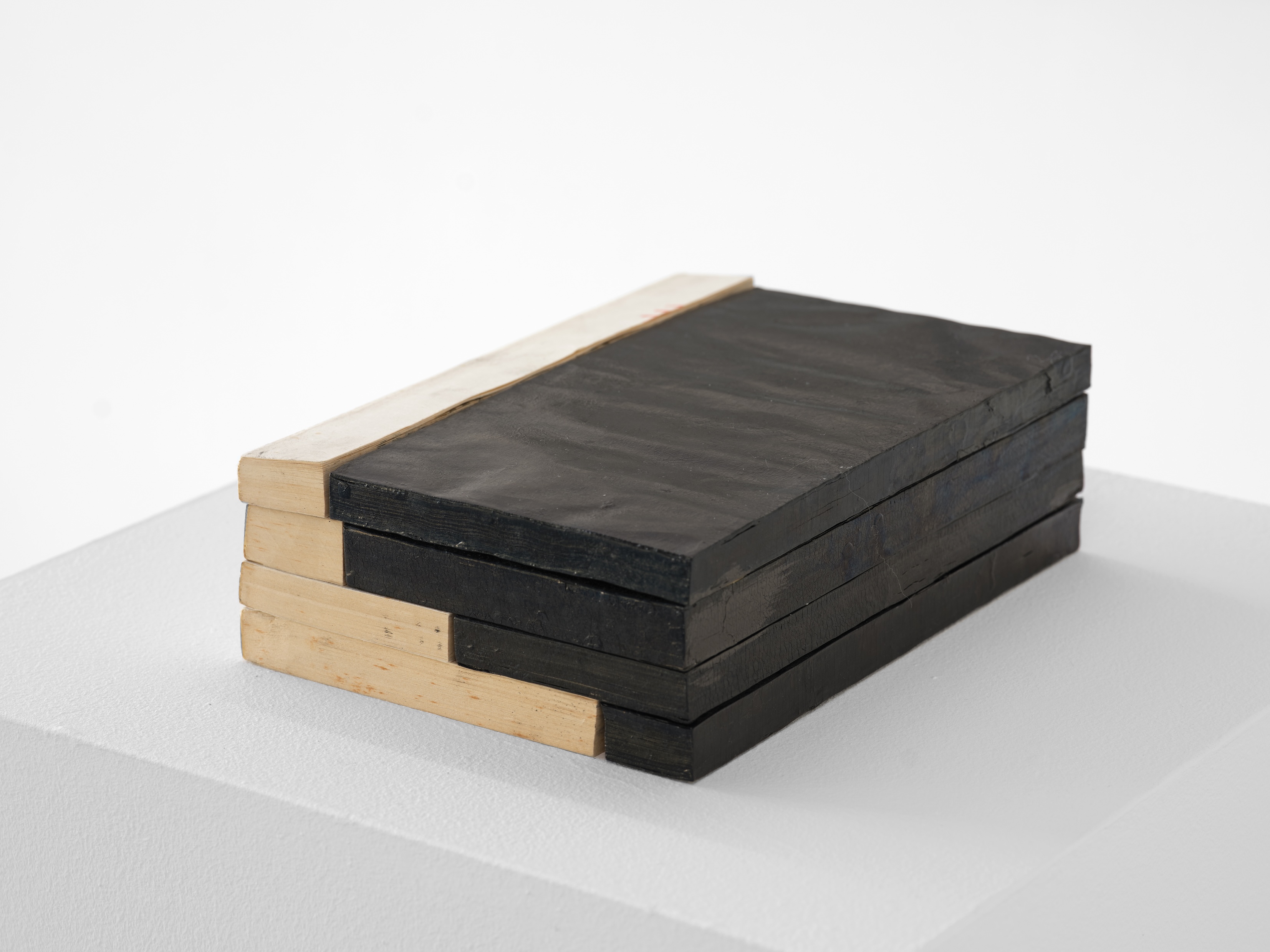
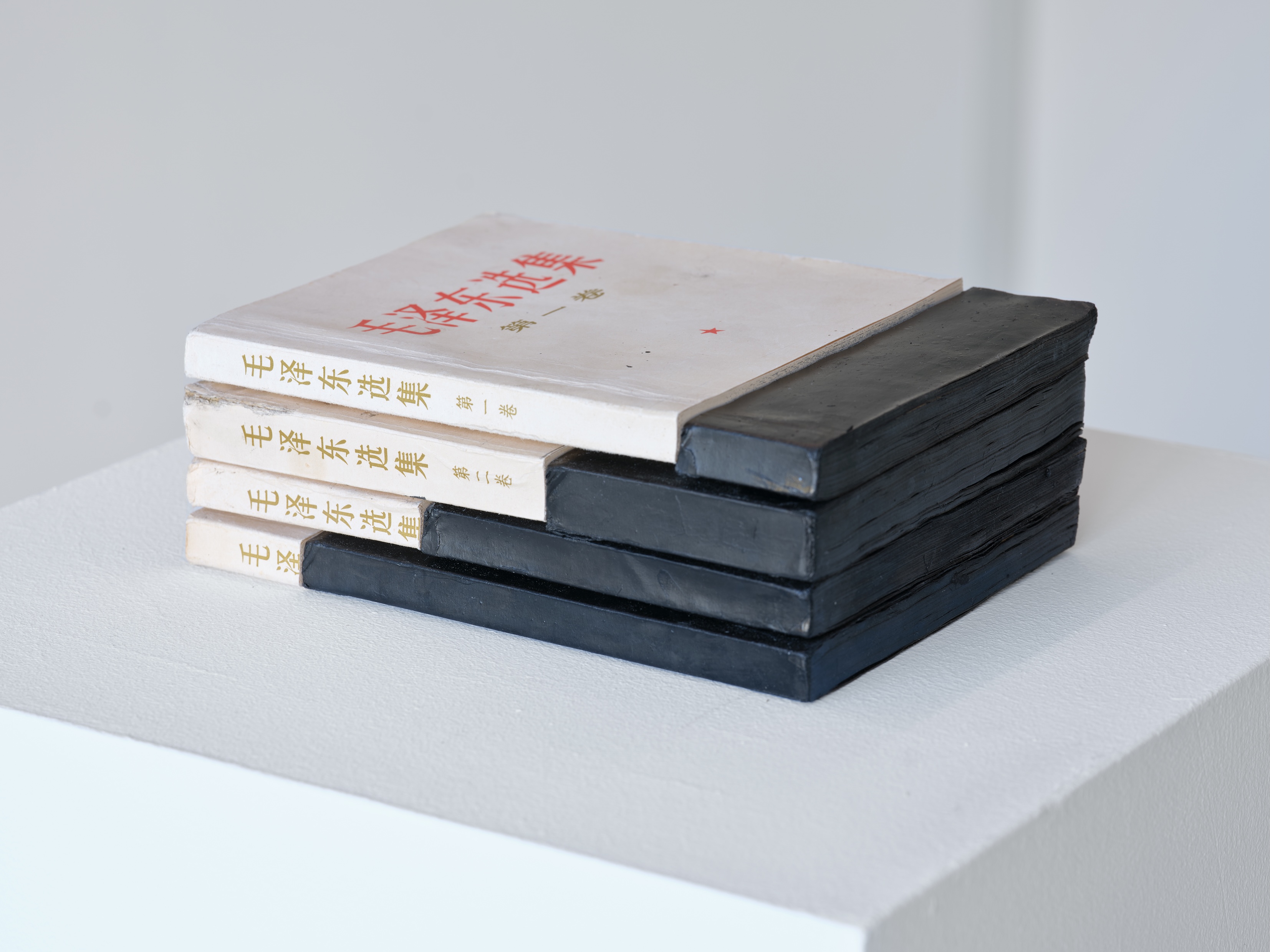
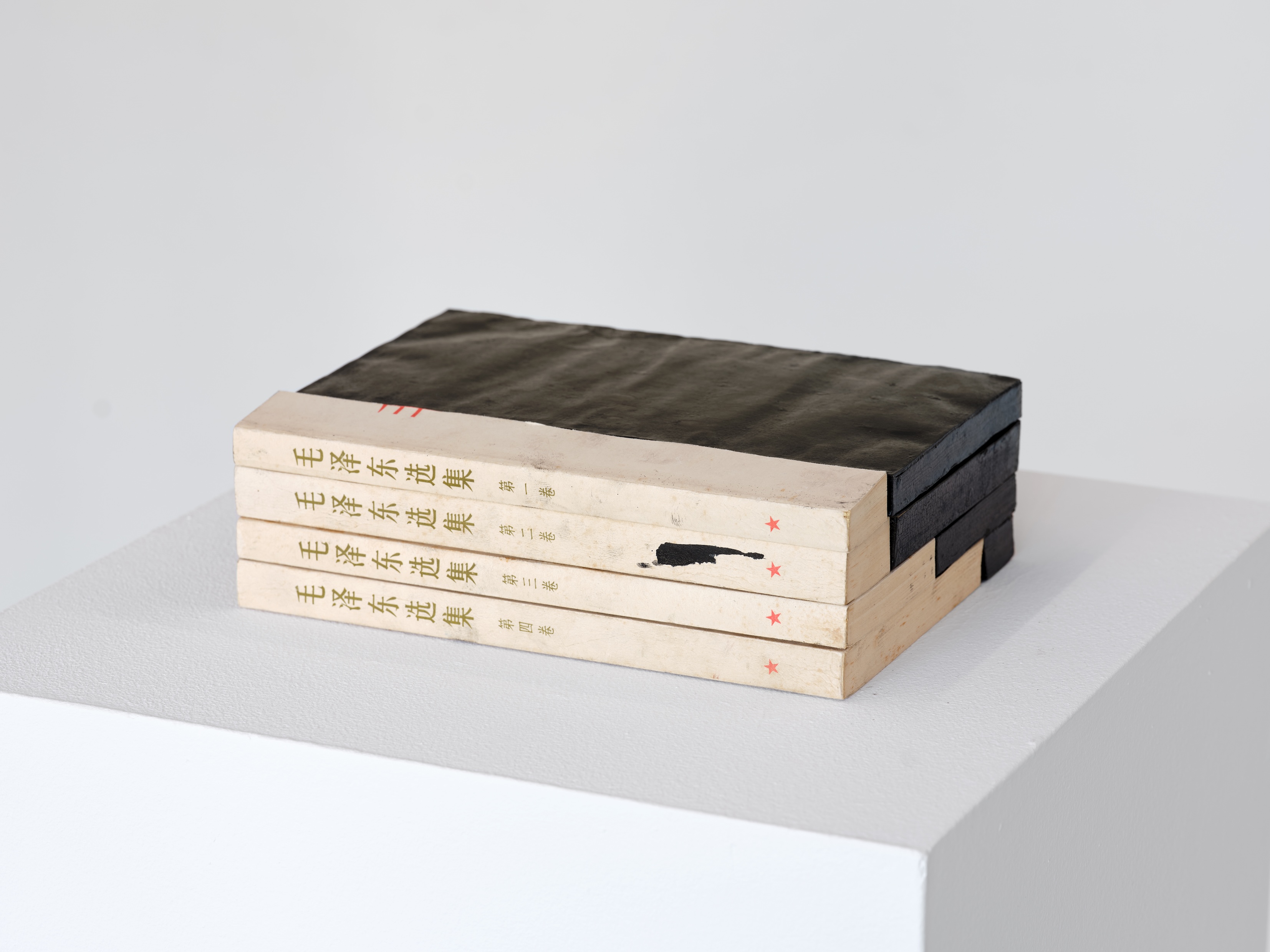
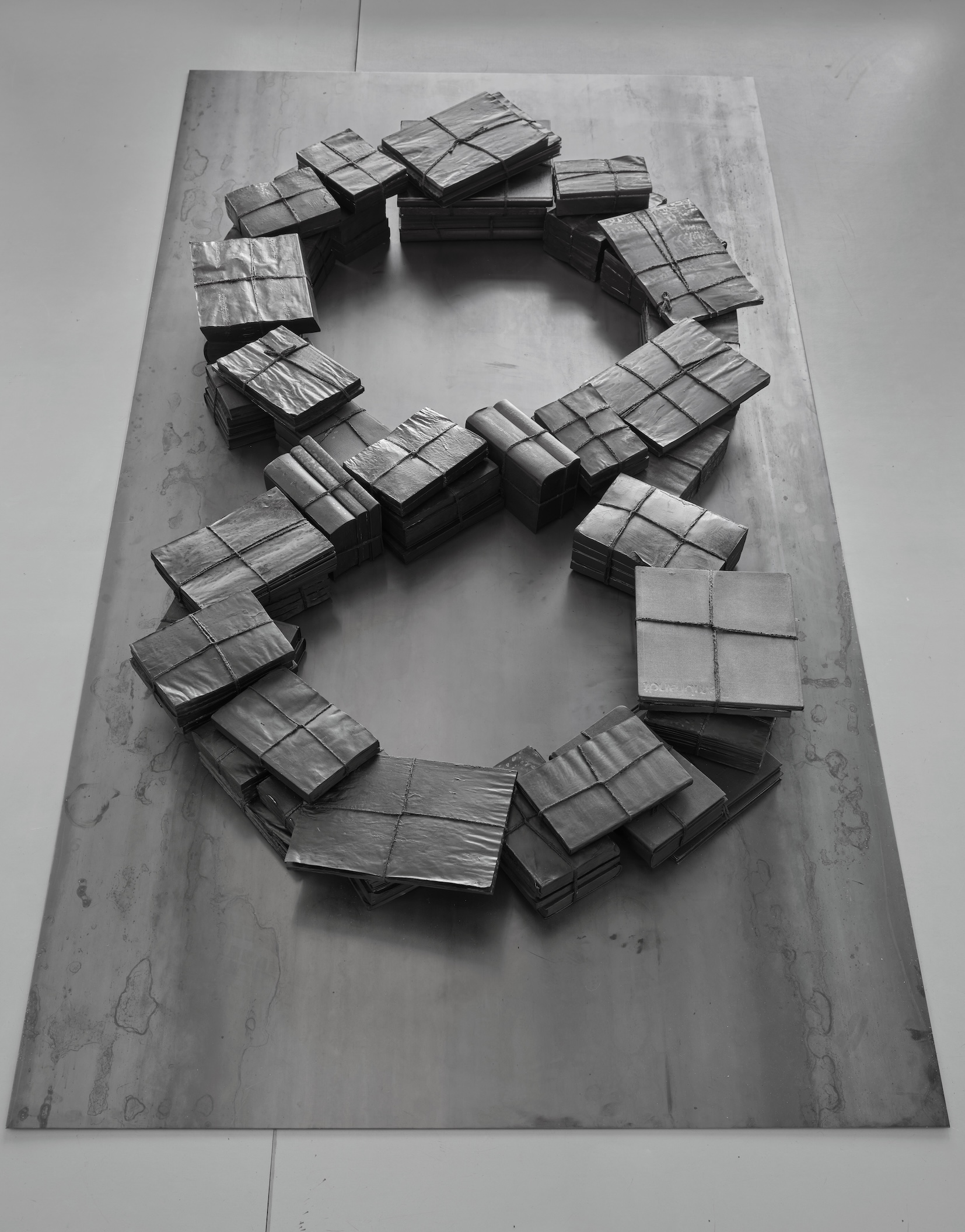
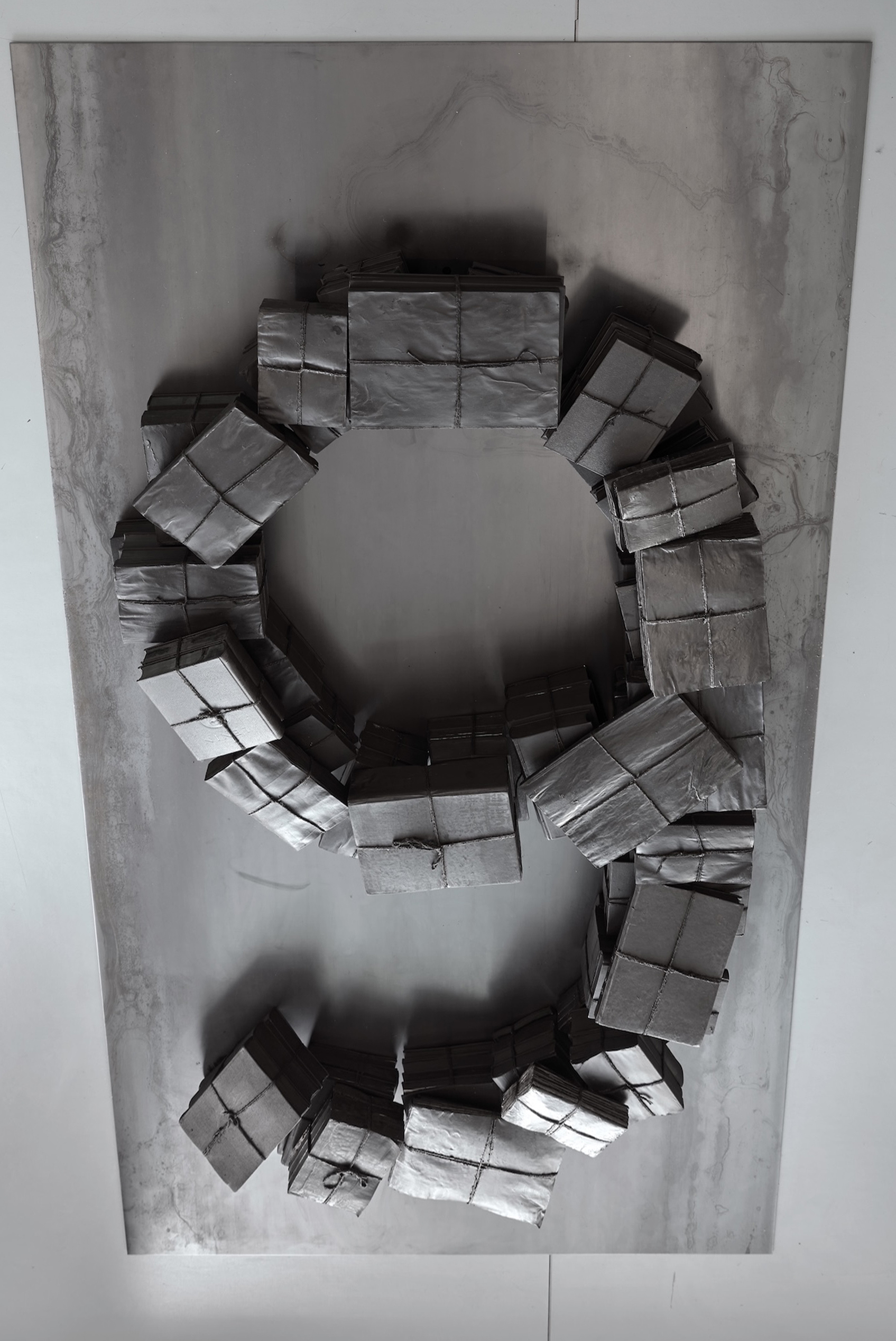
In his exhibition 《89》 Ink-stained books, Chinese artist Huang Rui reflects on historical memories of the year 1989 in Beijing and Berlin.
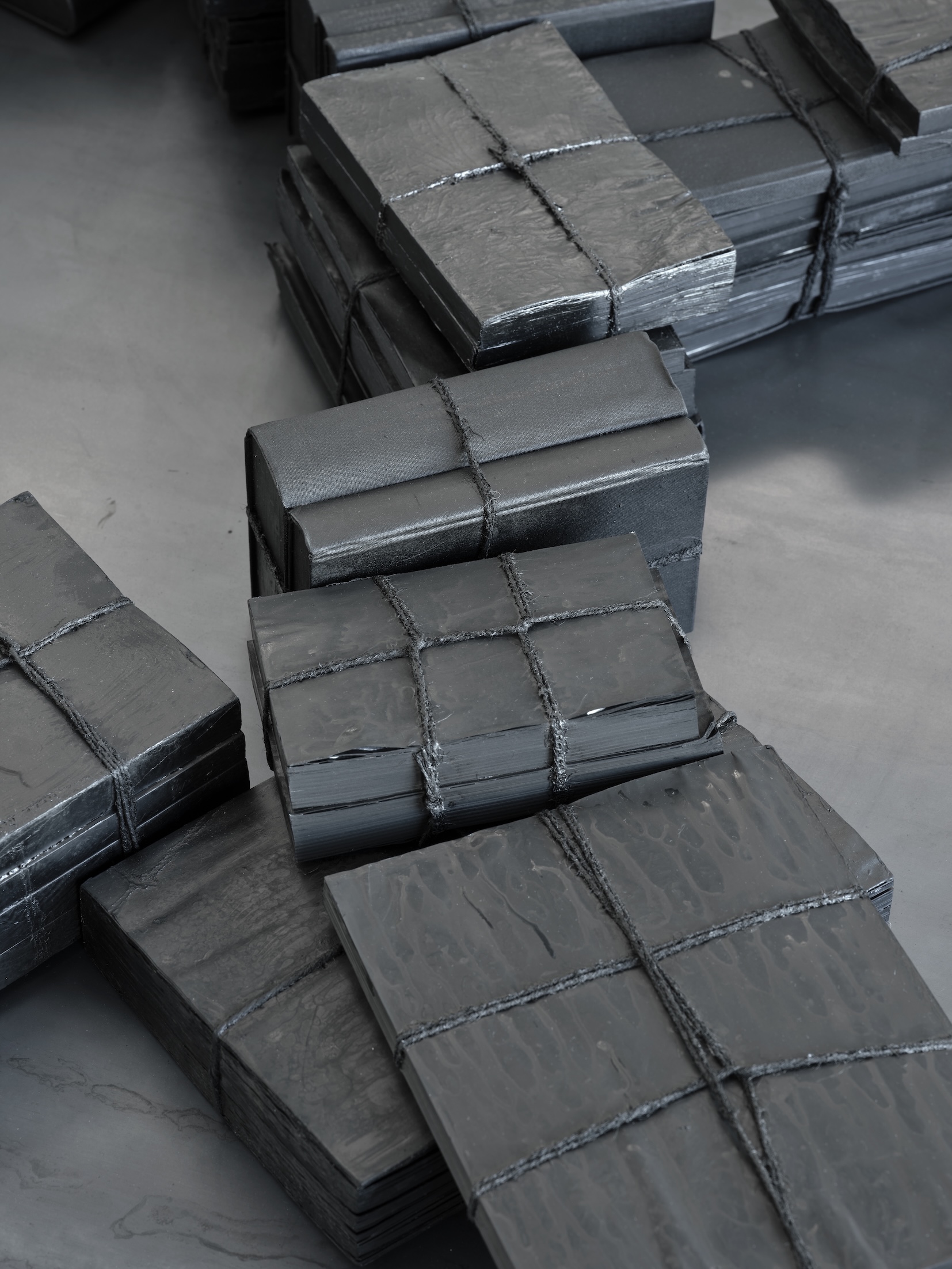
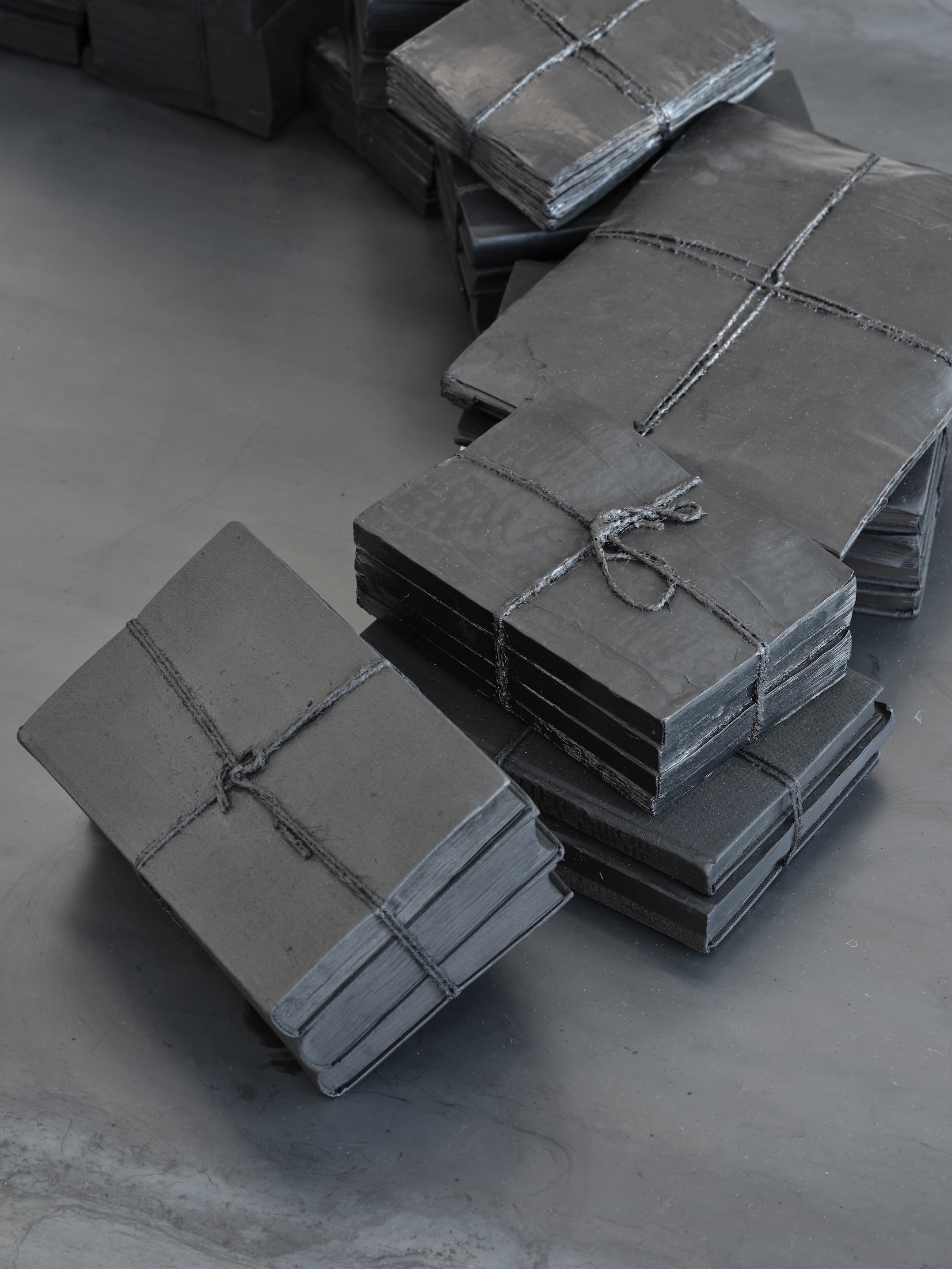
"Ink-stained books bestow forbidden value upon what was once forbidden. In 1992, I first saw the crumbling Berlin Wall. I knew its story—before 1989 and in 1989. Now it is nearly invisible. The “1989 Wall” in Beijing, China, is tall, heavy, and long. Not only is it invisible, but almost no one is aware of its existence. Any written text, printed material, or online/offline content about that history remains taboo in China. Seeing yet not seeing, knowing yet not knowing – concepts rooted in Daoist philosophy, symbols and their connotations—directly guide me in this work. Encasing ordinary books and printed material in ink is an act of violence, far from normal. Yet my practice remains intensely personal and introspective. I use the number 8 to allude to China, and 9 to allude to Germany. The problem is there is no fair or reasonable way to view 1989—the confrontation and dialogue between Eastern and Western histories. Thus, I chose the distinction between two modes of viewing: on the street, people see numbers; within the space, they see everything—an artwork that refuses further communication. An alien text encased in solidified black blood.“
(Huang Rui, December 2025)
Huang Rui was born in 1952 in Beijing. He lives and works between Paris (France) and Beijing(China). Founder of the Stars Group (Xing Xing 星星), he played a pivotal role in what was the first public art exhibition of the post-Mao era in China in 1979, considered the pioneering movement of contemporary art. It gave rise to some of the first expressions of artistic freedom and brought together like-minded artists. Since more than 40 years, Huang Rui has strived to express that the function of art is a reflection of society, and one of its missions is to respond to contemporary concerns. It was with this conviction that he initiated the creation of the 798 Art District in Beijing in 2002, which has since become the hub of contemporary art in China. His work - whether painting, sculpture, installation and performance - is deeply rooted in a living, contemporary approach to the principle of Tao (Book of Changes), through an often minimalist aesthetic search, renowned for challenging the political and aesthetic conventions of his era.
_
Thema der Ausstellung 《89》 Ink-stained books des chinesischen Künstlers Huang Rui (1952) ist die historische Erinnerung an das Jahr 1989 in Peking und Berlin.
Mit Tinte durchtränkte Bücher verleihen dem einst Verbotenen, verbotenen Wert. 1992 sah ich zum ersten Mal die zerfallende Berliner Mauer. Ich kannte ihre Geschichte – vor 1989 und im Jahr 1989. Heute ist sie nahezu unsichtbar. Die1989er-Mauer‘ in Peking ist hoch, schwer und lang. Sie ist nicht nur unsichtbar, sondern fast niemand ist sich heute ihrer Existenz bewusst. Jeder geschriebene Text, jedes gedruckte Material oder Online-/Offline-Inhalte über diese Geschichte bleiben in China tabu. Sehen und doch nicht sehen, wissen und doch nicht wissen – Konzepte, die in der daoistischen Philosophie, in Symbolen und ihren Konnotationen verwurzelt sind, leiten mich in dieser Arbeit. Gewöhnliche Bücher und Druckmaterialien vollständig mit Tinte zu durchdringen, ist ein Akt der Gewalt und alles andere als normal. Dennoch bleibt meine Praxis in intensiver Weise persönlich und introspektiv. Ich verwende die Zahl 8 als Konnotation für China und die 9 als Konnotation für Deutschland. Das Problem ist, dass es keinen gerechten oder angemessenen Weg gibt, das Jahr 1989 zu betrachten – die Konfrontation und den Dialog zwischen östlicher und westlicher Geschichte. Deshalb habe ich entschieden, zwei unterschiedliche Betrachtungsweisen einzunehmen: Von der Straße aus sehen die Menschen Zahlen; innerhalb des Ausstellungsraums sehen sie alles – ein Kunstwerk, das jede weitere Kommunikation verweigert. Ein fremder Text, eingeschlossen in verfestigtem schwarzem Blut.
(Huang Rui, Dezember 2025)
Huang Rui wurde 1952 in Peking geboren. Er lebt und arbeitet in Paris und Peking. Als Gründer der Stars Group (Xing Xing 星星) spielte er 1979 eine zentrale Rolle bei der ersten öffentlichen Kunstausstellung der Post-Mao-Ära, die als wegweisende Bewegung der zeitgenössischen Kunst in China gilt. Sie ebnete den Weg zu künstlerischer Freiheit und brachte gleichgesinnte Künstler*innen zusammen. Seit über 40 Jahren versteht er Kunst als Spiegel der Gesellschaft und Antwort auf aktuelle Themen. Aus dieser Überzeugung heraus initiierte er 2002 die Gründung des 798 Art District in Peking, der seitdem zum Zentrum der zeitgenössischen Kunst in China geworden ist. Sein vielfältiges Werk – Malerei, Skulptur, Installation und Performance – verbindet minimalistische Ästhetik mit taoistischen Prinzipien, hinterfragt konsequent politische und künstlerische Konventionen und befasst sich intensiv mit den Themen einer lebendigen, modernen Gesellschaft.